Ancient Egyptian tomb reveals details of high-ranking official
Summary and headline written by AI from the source article. How we work
Archaeologists working near Luxor, Egypt, uncovered a 3000-year-old tomb during flood protection work on historical sites.
An international team collaborating with the Egyptian Ministry of Tourism and Antiquities discovered the previously unknown burial site while building a water diversion system around established tombs. The researchers dated the structure to the Ramesside period, roughly 1292 to 1069 BCE, and believe it belonged to a high-ranking official named Paser.
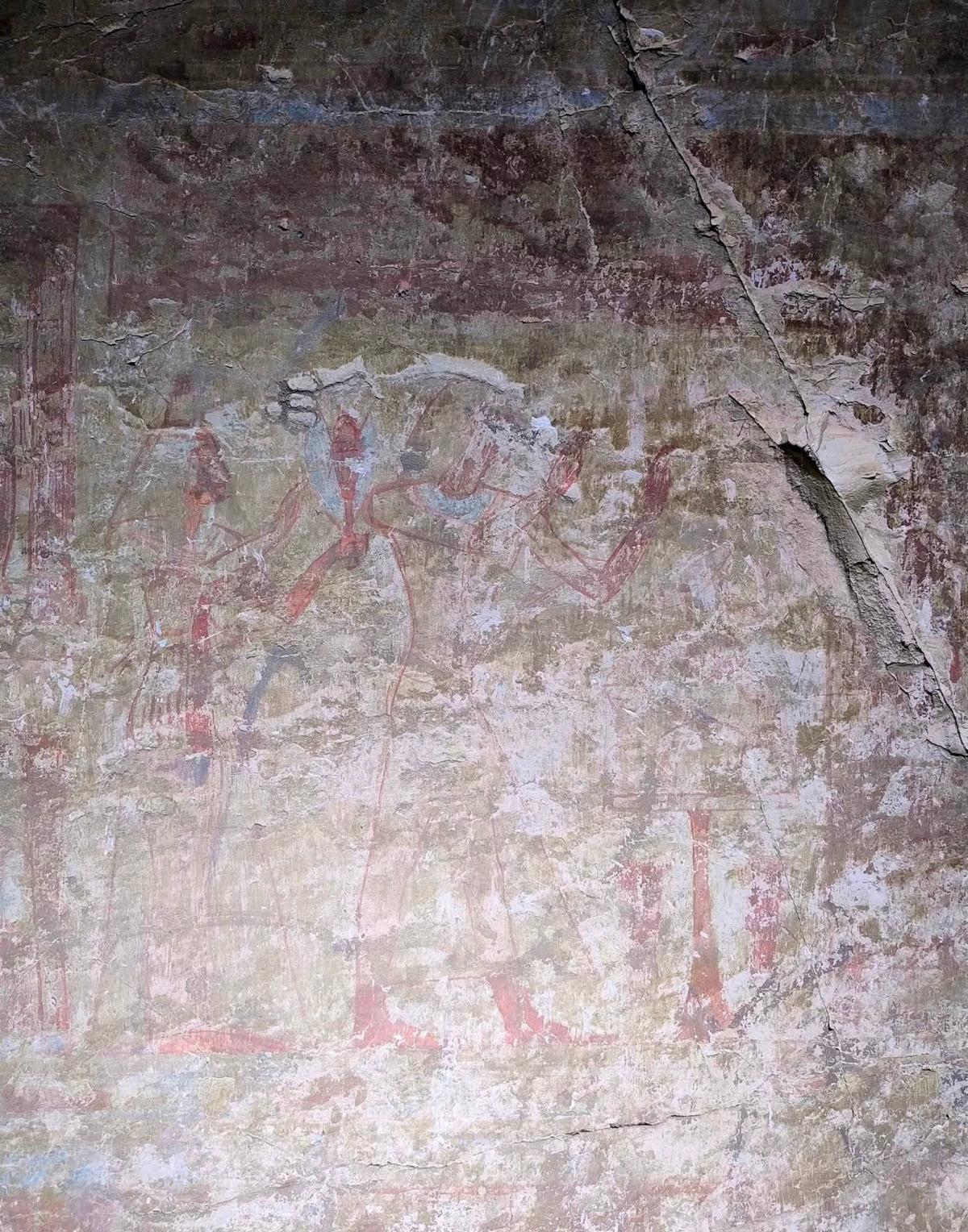
The tomb contains vivid paintings on its walls depicting Paser, his wife, and scenes of worship to ancient Egyptian gods. A table before the couple displays offerings of bread, beer, fruit, and flowers. Scientists currently base their identification of the tomb’s owner on preliminary analysis of the artwork, noting that the paintings are still covered in dirt. Experts hope to learn more about Paser and others buried in the tomb once the paintings are cleaned.
The discovery may also offer insight into why officials during the Ramesside period often built new tombs near monuments from the Eighteenth Dynasty, including the role of religious processions and family burial grounds in site selection. However, rising floodwaters currently threaten the tomb’s preservation, potentially damaging the paintings and the structure itself.