Researchers build fake ancient scrolls to aid decipherment
Summary and headline written by AI from the source article. How we work
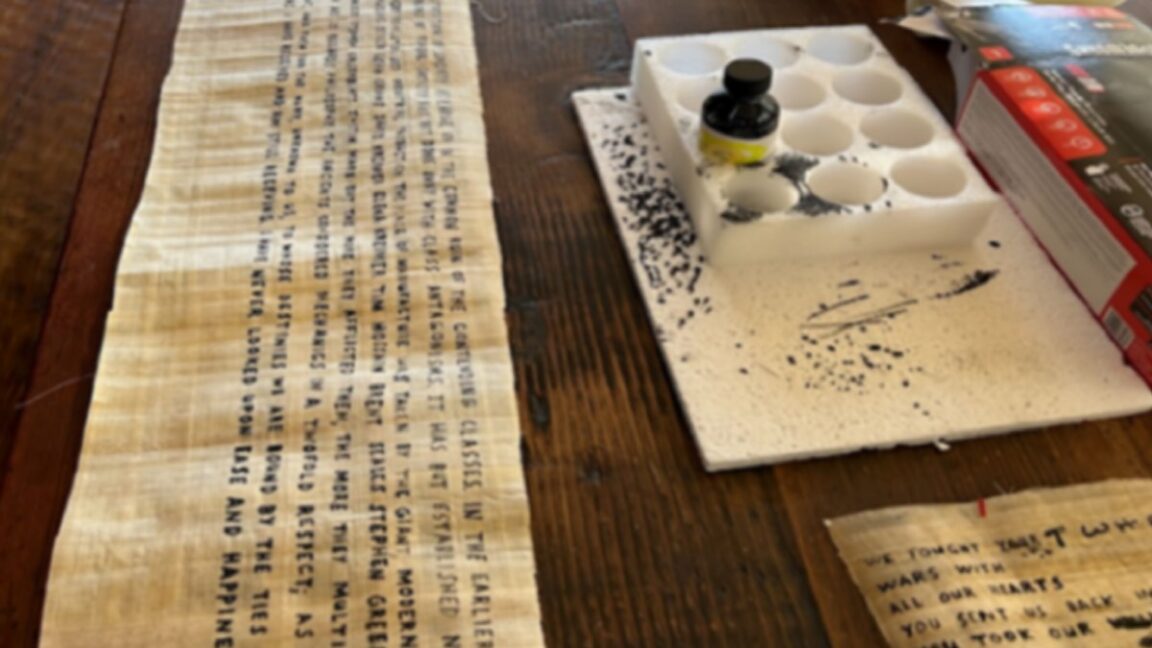
Researchers at the University of Kentucky created artificial papyrus scrolls and charred them to replicate the condition of 2,000-year-old Herculaneum scrolls found in Italy.
These Herculaneum scrolls, preserved by the eruption of Mount Vesuvius in 79 AD, were too fragile to unroll, but contained texts from the library of the philosopher Philodemus. Brent Searles’ lab developed a technique to examine the scrolls without physically opening them, building on work they previously did with a charred scroll from the Dead Sea.
The team needed a way to identify which of the hundreds of Herculaneum scrolls were written with lead-based ink, as these are more likely to be readable with their screening methods. Existing techniques could not reliably distinguish between lead and carbon on the fragile material. By creating and intentionally damaging their own scrolls, the researchers could test and refine their process for detecting lead ink without risking the original artifacts.
This research supports the Vesuvius Challenge, an ongoing effort that uses digital imaging and crowdsourced machine learning to read the Herculaneum scrolls. Scholars have already identified fragments of Greek philosophical texts, including works by Epicurus and Philodemus, within the collection. The team published their findings in the journal PLoS ONE.


