Star Trek’s legacy: diversity and inspiration at NASA
Summary and headline written by AI from the source article. How we work
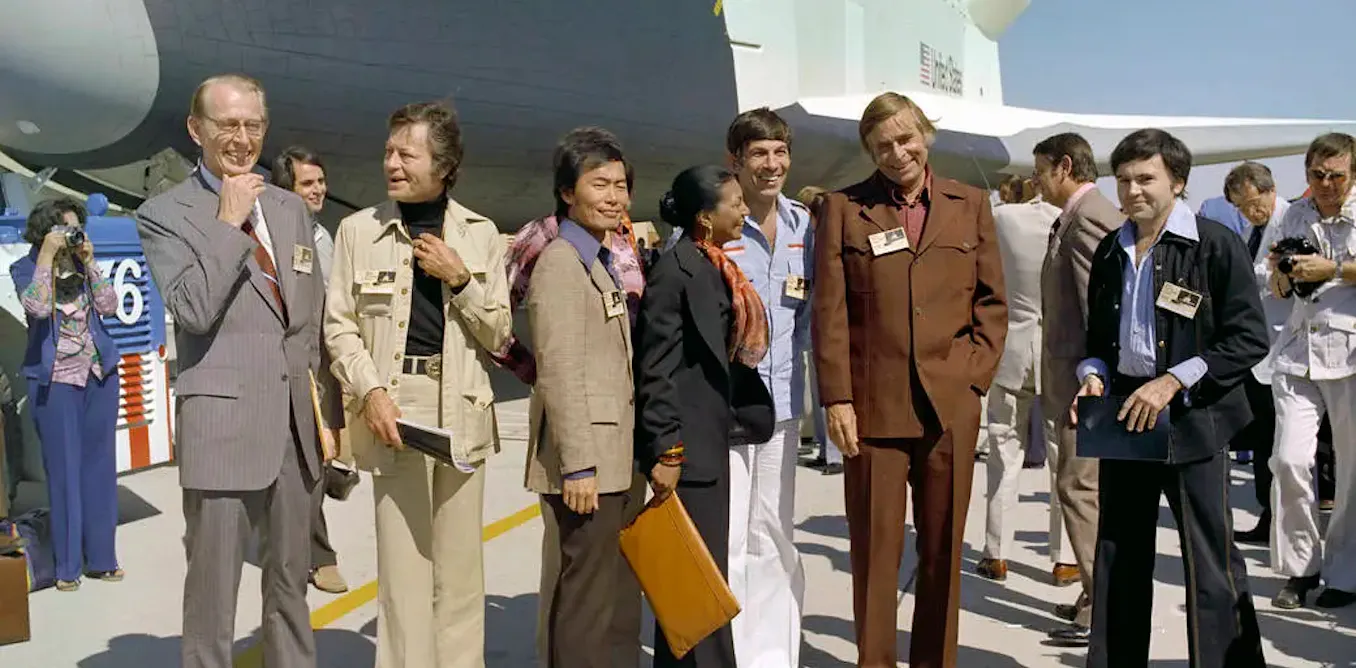
Beginning in 1966, the television series “Star Trek” developed a close relationship with NASA, exchanging ideas and support. Gene Roddenberry, the show’s creator, promoted a philosophy of “infinite diversity in infinite combinations” which shaped the multicultural crew of the starship Enterprise and resonated with people working in space exploration.
NASA personnel provided the show with technical advice and footage, while “Star Trek” helped publicize the agency’s work and envision a future of space travel.
In 1977, NASA hired Nichelle Nichols, the actress who played Uhura, to help recruit a more diverse pool of candidates. The agency subsequently selected its first Black and female astronaut candidates in 1978, aligning with the show’s values. A quarter of the space professionals interviewed by a cultural anthropologist cited “Star Trek” as an influence on their careers, with many recalling the show’s optimistic vision of space exploration and its inclusive crew.
Recent astronaut classes and the Artemis II mission, which included the first woman, first Black astronaut, and first Canadian on a lunar mission, reflect the diversity “Star Trek” portrayed. However, the Trump administration’s recent dismantling of NASA’s diversity programs threatens to undo some of the progress made towards a more inclusive future in space exploration, even as NASA reaches new milestones in representation.