Archaeologist identifies female king who led to Roman conquest of Britain
Headline and summary by local AI
Archaeologist Miles Russell of Bournemouth University identified Verica as a female ruler of the Atrebates tribe in southern Britain.
During the early first century, Verica served as a client king for the Roman Empire. Her exile around 40 CE provided Emperor Claudius with a reason to invade the island, starting a campaign that led to the Roman conquest of Britain. Russell argues that previous historians assumed Verica was male due to the patriarchal perspective of 19th century scholars.
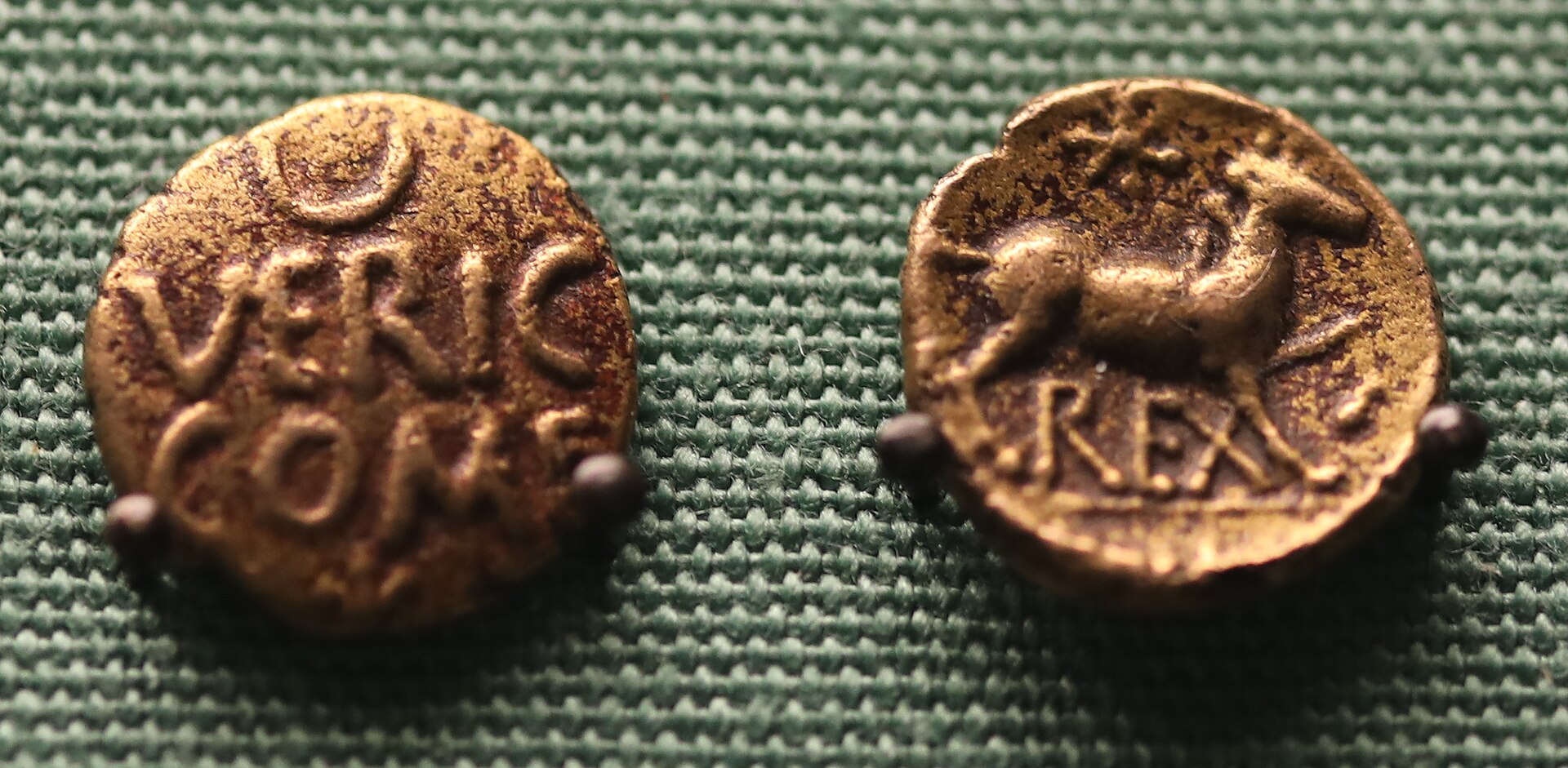
He points to linguistic and visual evidence on coins found in Hampshire and Sussex. The name Verica ends in a letter typically reserved for women at the time, and the coins depict a slender, bare-breasted woman on the front. The coins also feature the Latin title rex. Russell explains that the Roman Empire recognized female kings and used the term as a gender-neutral title.
Furthermore, the inscription COMF on the coins was previously interpreted as son of Commios, but Russell states it could just as easily mean daughter of Commios. This discovery changes the interpretation of Emperor Claudius' motivations. Historians like Cassius Dio portrayed Claudius as a weak leader easily influenced by women. Identifying Verica as female aligns with the narrative that Claudius launched the invasion because of the influence of a woman.
Russell suggests the invasion was a strategic opportunity for Claudius to prove his military success, while Verica provided the excuse for a regime change.
Selected and summarized by local AI How we work
Discovery: Archaeology, new knowledge of art, culture and history, forgotten history uncovered, something lost restored.