Scientists identify new amphibian species from the era of dinosaurs
Headline and summary by local AI
An international team of researchers identified a new species of amphibian that lived in Europe approximately 66 million years ago.
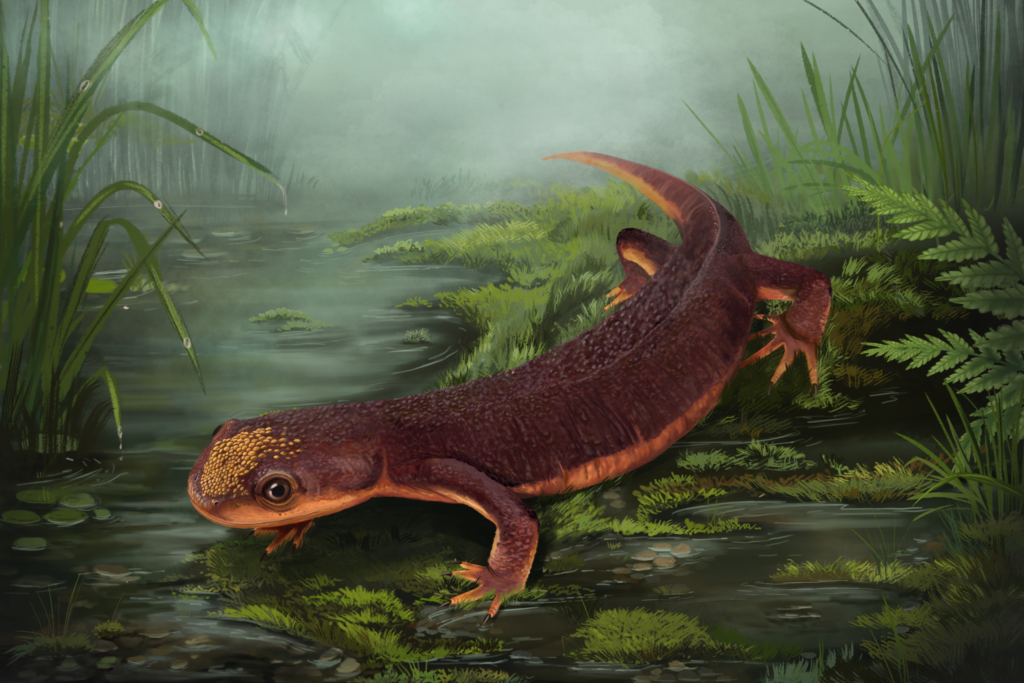
The team analyzed more than eighty fossil remains found in 1997 at the Blasi site in Areny de Noguera, located in the Ribagorça region of Spain. The new species, named Synorerpeton ribagorzana, measured less than five centimeters in length.
While the animal resembled a small salamander, it possessed unique anatomical features such as dry and scaly skin, keratin claws, and a rapid projection tongue for catching prey. Researchers from the University of Lisbon, the University of Zaragoza, the Spanish Geological and Mining Institute (IGME-CSIC), and the Catalan Institute of Human Paleoecology and Social Evolution (IPHES-CERCA) led the study published in the journal Cretaceous Research. The fossils include fragments of skulls and cervical vertebrae.
By comparing these remains to older fossils from the Jurassic period, the researchers found that later species developed more robust structures and larger skulls. The team suggests these changes might relate to shifts in the animals' ecological habits over millions of years. The Blasi site provides a unique window into European ecosystems because the fossils were deposited about 500,000 years before the asteroid impact that caused the extinction of non-avian dinosaurs.
The findings suggest that two different lineages of albanerpetontids lived together in Europe at the end of the Cretaceous period. These results indicate potential connections between populations in Western Europe and North America, while Eastern European populations may have maintained links with Asia or older European groups.
Selected and summarized by local AI How we work
Discovery: Archaeology, new knowledge of art, culture and history, forgotten history uncovered, something lost restored.