Salvadoran designer showcases traditional crafts at Madrid design biennial
Headline and summary by local AI
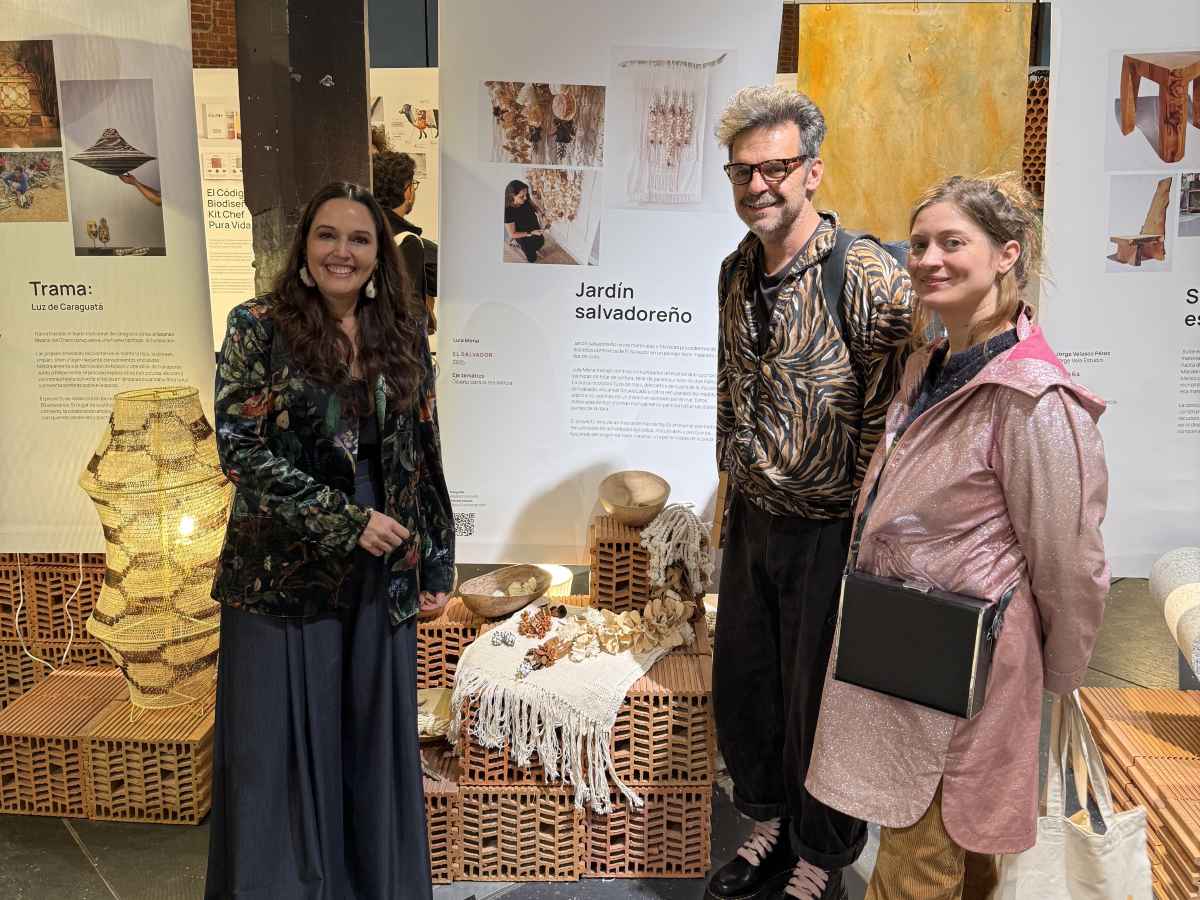
Salvadoran designer Lula Mena exhibited a textile installation called Jardín Salvadoreño at the Bienal Iberoamericana de Diseño 2026 in Madrid, Spain.
The exhibition took place from November 2 to November 7 at Matadero Madrid. Her work joined the Central Exhibition to represent the intersection of traditional craftsmanship, recycled materials, and contemporary design. The installation pays tribute to the national identity of El Salvador by using textiles inspired by the izote flower.
Mena used raw cotton created through traditional techniques, such as the backstrap loom and the lever loom. The piece features a three-dimensional composition of flowers and natural elements suspended from a sea-eroded log. Mena used various recovered materials to create the work, including corn husks, fish scales, leather scraps from the footwear industry, and copper wires from old electric meters. She collaborated with three artisan communities to produce the piece, including groups from Puerto de La Libertad and Santiago Texacuangos.
The project also involved the collectives Olas de Esperanza and Semillas de Felicidad. Mena has operated her brand since 2013 to provide economic opportunities for Salvadoran women. Her work focuses on fair trade and social practices, earning her the Nest Seal of Ethical Craft in 2022. The design showcased in Madrid highlights how traditional knowledge can be preserved through sustainable innovation.
Selected and summarized by local AI How we work
Discovery: Archaeology, new knowledge of art, culture and history, forgotten history uncovered, something lost restored.