Paleontologists discover 331 million year old superpredator shark tooth in Spain
Headline and summary by local AI
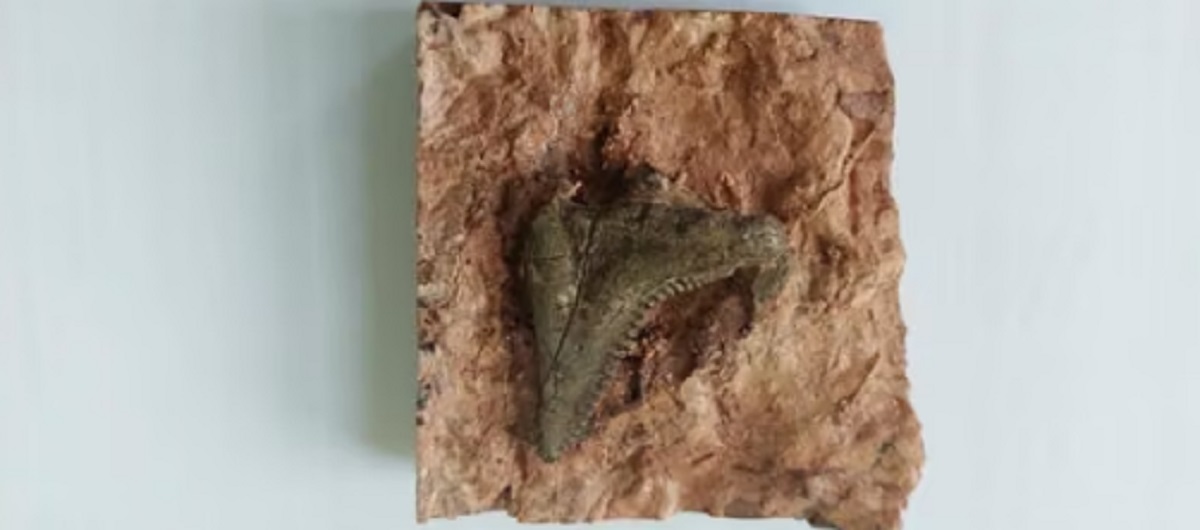
Paleontologists from the universities of Oviedo, Valencia, and UNED studied a fossilized tooth from a Carcharopsis superpredator that lived 331 million years ago.
The team analyzed the find, which was located by geologists from the NGO Geólogos del Mundo in a limestone slab in Asturias, Spain. The researchers used computer microtomography to reconstruct the fragmented tooth without damaging it. This non-destructive technique allowed them to see the internal structure and the vascular network at the base of the tooth.
The analysis showed a wide, curved cusp with double serrated edges similar to those of modern tiger sharks. These features suggest the ancient shark was a hypercarnivore capable of cutting through meat and shells. Based on mathematical models of modern sharks like the great white and the tiger shark, the team estimated the animal reached lengths of five to six meters. This makes it one of the largest marine superpredators of the Carboniferous period.
The discovery provides new evidence on how marine ecosystems recovered after the biological crisis at the end of the Devonian period. The find also expands the known geographical range of the Carcharopsis genus. While previous fossils were found in the south of the ancient continent of Laurussia, this specimen confirms the presence of these large sharks in the north of the ancient continent of Gondwana. This suggests the species could move between coastal waters and the open sea.
Selected and summarized by local AI How we work
Discovery: Archaeology, new knowledge of art, culture and history, forgotten history uncovered, something lost restored.