Ashmolean museum uses digital projections to restore ancient shrine colors
Headline and summary by local AI
The Ashmolean Museum in Oxford, England, will use digital light projections to recreate the original colors of the 2,700-year-old Shrine of Taharqa.
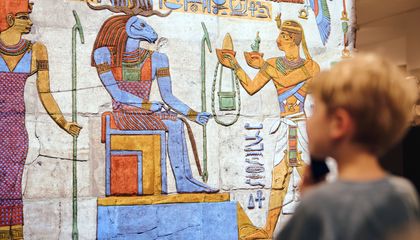
The shrine was originally built in the city of Kawa in northern Sudan. Pharaoh Taharqa commissioned the structure between 690 B.C.E. and 664 B.C.E. to honor the god Amun-Ra. While the sandstone walls currently appear beige, researchers believe the carvings were originally covered in vibrant paints and plaster.
British archaeologists excavated the site in the 1930s and transported the structure to England, where it remains the only free-standing pharaonic building in the country. To prepare for the exhibition, researchers used infrared and hyperspectral imaging cameras to find microscopic traces of pigments. They discovered evidence of Egyptian Blue, a synthetic pigment that people historically used for royalty and deities, along with traces of red and yellow.
These colors will be projected onto the 43-square-foot sandstone structure starting on November 13. The museum will also show two new films detailing the shrine's history and its 2,500-mile journey from Sudan to England. The Sudanese government gave the shrine to the museum to honor the work of Egyptologist Francis Llewellyn Griffith, who oversaw the disassembly of the building into 200 wooden crates for transport.
Selected and summarized by local AI How we work