20th century Paphos marriage dowries included houses and petrol stations
Headline and summary by local AI
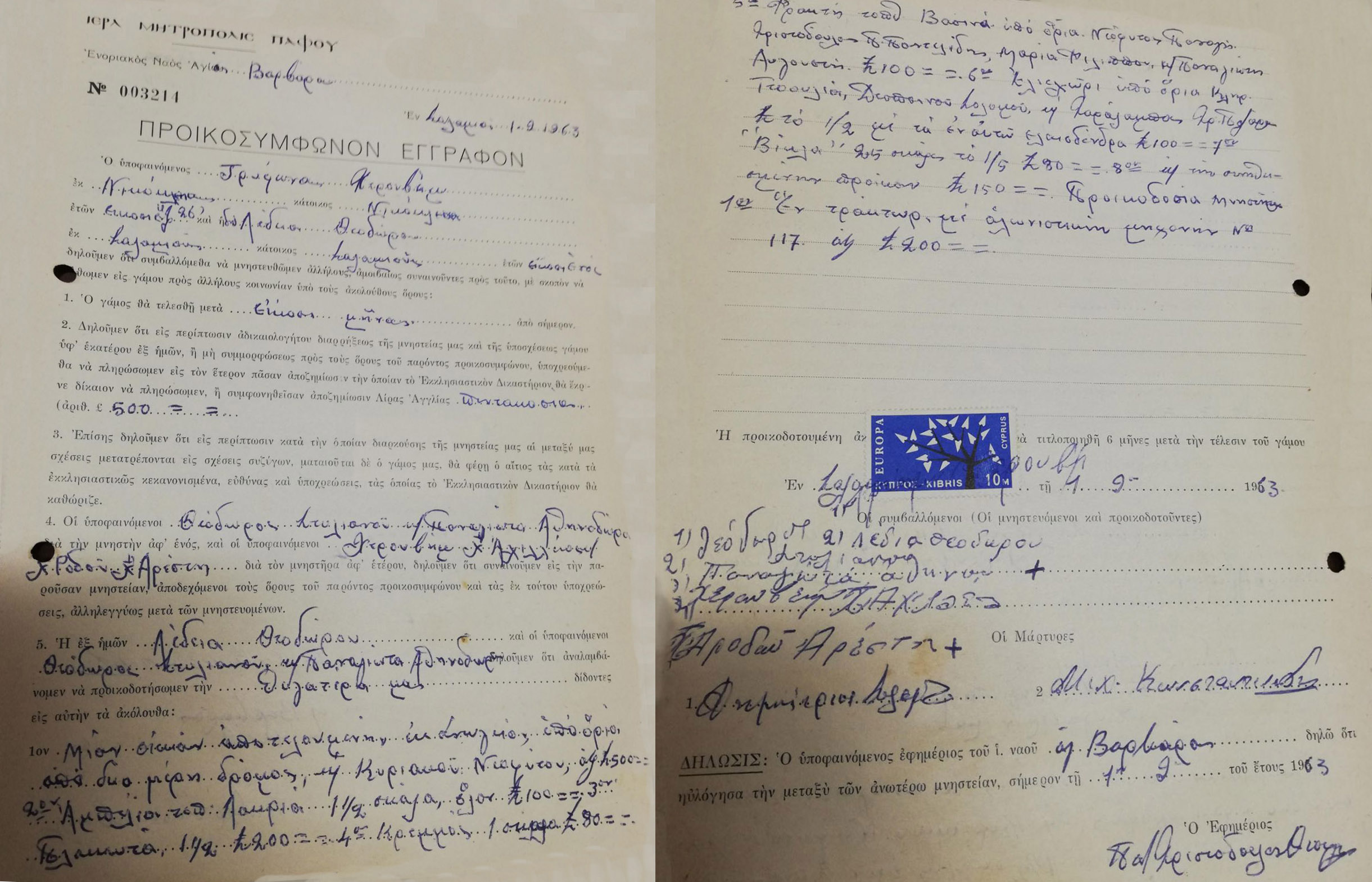
Philologist Dr Efthymia Lemoniatis studied 393 marriage dowry agreements from the Paphos, Tsada, and Salamiou regions of Cyprus to understand historical property transfers.
The research focused on documents primarily drawn up between 1940 and 1970. These records show that dowries functioned as economic mechanisms to help young couples establish homes and support the local economy. The study reveals that brides' families bore a heavy financial burden to secure these arrangements.
In Paphos, the bride's family contributed to 231 out of 260 agreements, while the groom's side contributed to only 75. This disparity was even more pronounced regarding housing. In Tsada, the bride's family provided 31 houses while the groom's side provided none. In Paphos, the bride's family provided 184 houses compared to 10 from the groom's side. Dowry items varied from livestock and land to industrial assets.
In Salamiou, the records show 478 land grants to women and 261 to men, including 195 vineyards for women. Some agreements included modern assets like Singer sewing machines to help women earn money or even entire businesses. One substantial agreement included a car, 20 plots of land, a house, a shop, and a petrol station. While church authorities documented these obligations, the records do not confirm if all promised items were actually delivered.
Selected and summarized by local AI How we work
Discovery: Archaeology, new knowledge of art, culture and history, forgotten history uncovered, something lost restored.