Crushed shells help protect young clams from acidifying oceans
Headline and summary by local AI
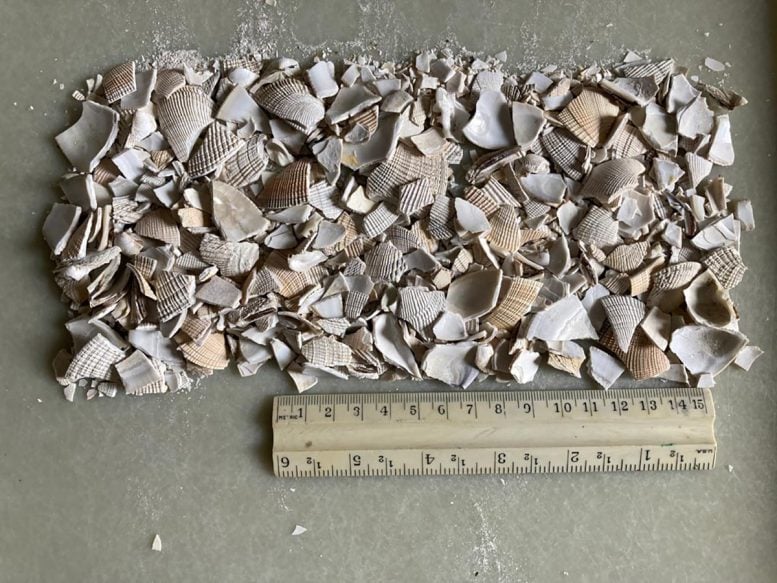
Researchers at the University of California, Davis, found that adding crushed shells, known as shell hash, helps young Pacific littleneck clams grow larger shells despite acidic seawater.
The study took place at the UC Davis Bodega Marine Laboratory, where the team monitored how different sediment conditions affected the growth of the mollusks. The researchers observed that ocean acidification makes it harder and more energy-intensive for animals like clams, oysters, and mussels to build their shells.
Because acidic water can dissolve shells, the larvae and juveniles of these species are particularly vulnerable. However, the team discovered that shell hash alters the chemistry of the water in the tiny spaces between sand particles. This local change reduces acidity and creates a safer environment for the clams to develop. Genetic analysis of the clams' mantle tissue showed that the shell hash also minimized the stress signals usually caused by acidification.
The researchers found that the genetic activity of clams raised in acidified water with shell hash looked nearly identical to those in non-acidified water. This study provides a scientific basis for traditional practices used by Indigenous communities in the Pacific Northwest and California, who have long added crushed shells to coastal sands to maintain healthy ecosystems. The study suggests that western science could work with Indigenous communities to support coastal stewardship.
By combining traditional ecological knowledge with scientific research, experts hope to design projects that protect marine habitats and reawaken cultural knowledge regarding coastal management.
Selected and summarized by local AI How we work
More in Discovery

Photographer Sanlé Sory documented African identity through studio portraits
artcentron.com · 4 Nov 2026
Anonymous donor hands 2,000-year-old Vandal artefacts to Polish museum
notesfrompoland.com · 6 Nov 2026
Archaeologists find large kidney stone in Bronze Age burial in Russia
gizmodo.com · 3 Nov 2026