New mosasaur species found in Egyptian desert reveals ancient marine life
Summary and headline written by AI from the source article. How we work
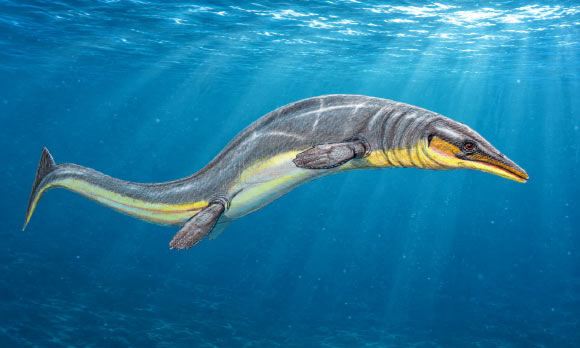
Paleontologists working in Egypt’s Dakhla Oasis uncovered a new species of mosasaur, Halisaurus auriculatus, a marine reptile that lived approximately 70 million years ago.
The team, led by researchers from Ain Shams University, discovered the fossil remains in 2024 within the Dakhla Shale near Teneida village. The specimen included a partial skull, jaw bones, and limb bones, all remarkably well-preserved. Halisaurus auriculatus belonged to the Halisaurinae subfamily, known for their relatively small size and primitive features.
This new species stands out due to its unusually long, slender jaws containing over 20 teeth on each side, and a unique ear structure. These characteristics suggest the mosasaur was adapted for quick bites with limited force, and potentially had enhanced underwater hearing to locate small prey like fish and squid in low-light conditions. The discovery is important because Halisaurinae mosasaurs are rarely found, and this new species coexisted with another mosasaur, Halisaurus hebae, in the same area.
Researchers believe the two species avoided direct competition by consuming different types of prey, a strategy called niche partitioning. This finding expands understanding of the diversity and ecological roles of mosasaurs in the Cretaceous period's oceans.
/https://tf-cmsv2-smithsonianmag-media.s3.amazonaws.com/filer_public/6c/5f/6c5f3401-48da-41c5-8eb0-c7f99032b198/11_nabarlek_on_augustus_island__ian_bool.jpg)