Russian medallion blends Christian saint with ancient myth
Summary and headline written by AI from the source article. How we work
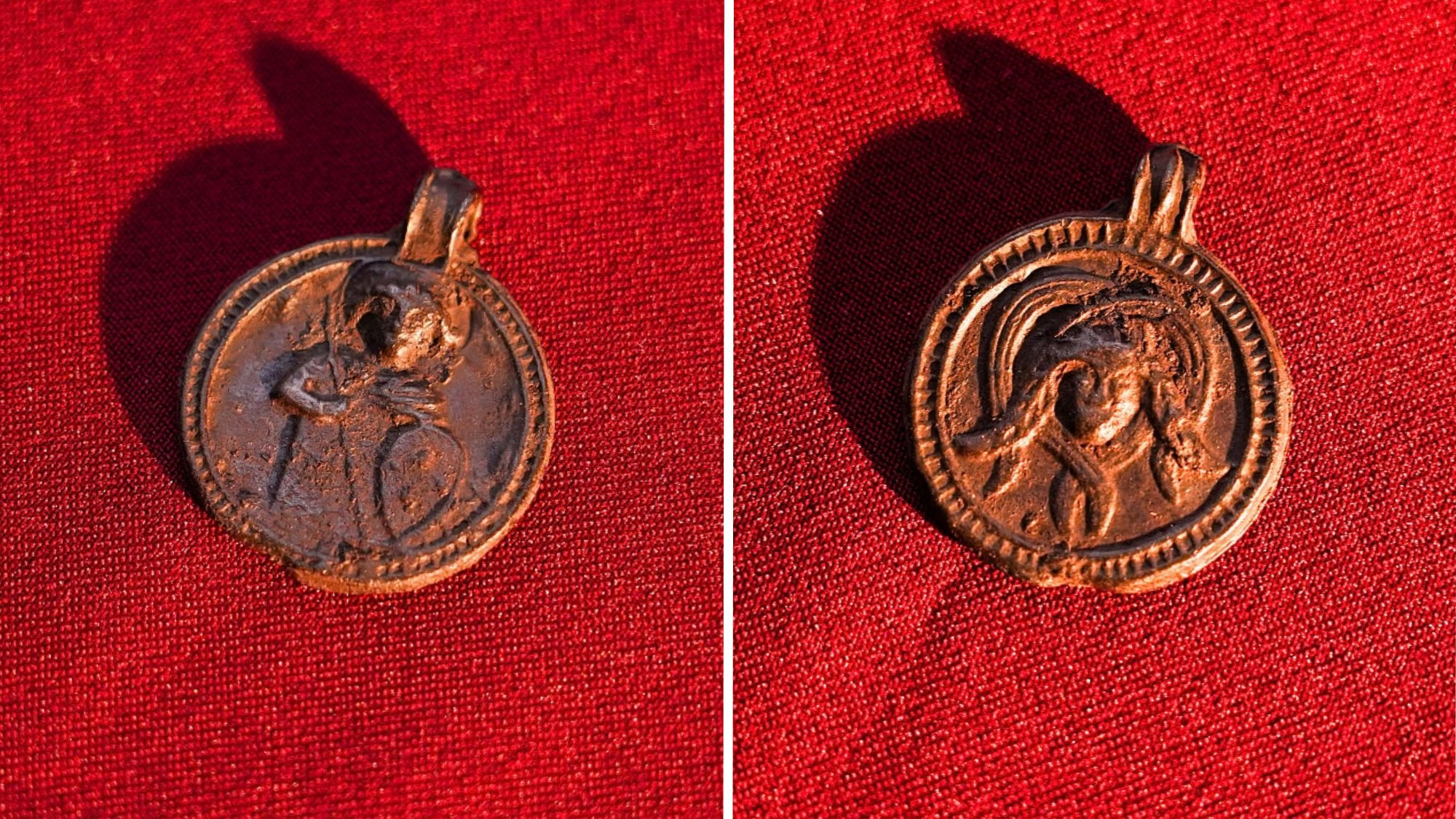
Archaeologists in Russia, near Staraya, uncovered an 11th-century copper-alloy medallion displaying a Christian warrior saint on one side and the head of Medusa on the other.
The pendant represents a merging of Christian beliefs and older, pre-Christian traditions common in the region during that period. Researchers from Novgorod State University believe the saint depicted is Theodore Stratelates, an Eastern Orthodox martyr known for battling serpents, and suggest Medusa represents general evil rather than the specific mythological figure.
This newly discovered artifact is one of only five similar “Zmeeviki” pendants, coil images pairing Christian figures with serpent imagery, ever found in the area, and it predates the others by several centuries. Previous examples date from the 12th to 14th centuries. The pendant’s existence demonstrates that even as Christianity gained prominence in Russia around the 1000s CE, people continued to practice older beliefs and incorporate protective symbols into their lives.
The owner of the medallion was likely a member of the middle class, as wealthier residents would have owned jewelry made from gold or silver. Evidence suggests the pendant itself may have been crafted in a workshop on the estate where it was found. Archaeologist Sergei Toropov noted that these pendants combine images considered incompatible by strict religious doctrine, revealing a desire to integrate both tradition and new ideas.