Archeologists discover human sacrifice in a hunnish burial site
Headline and summary by local AI
Archeologists from the Polish Academy of Sciences discovered a 1600 year old burial site in Czulice, a village near Krakow, Poland.
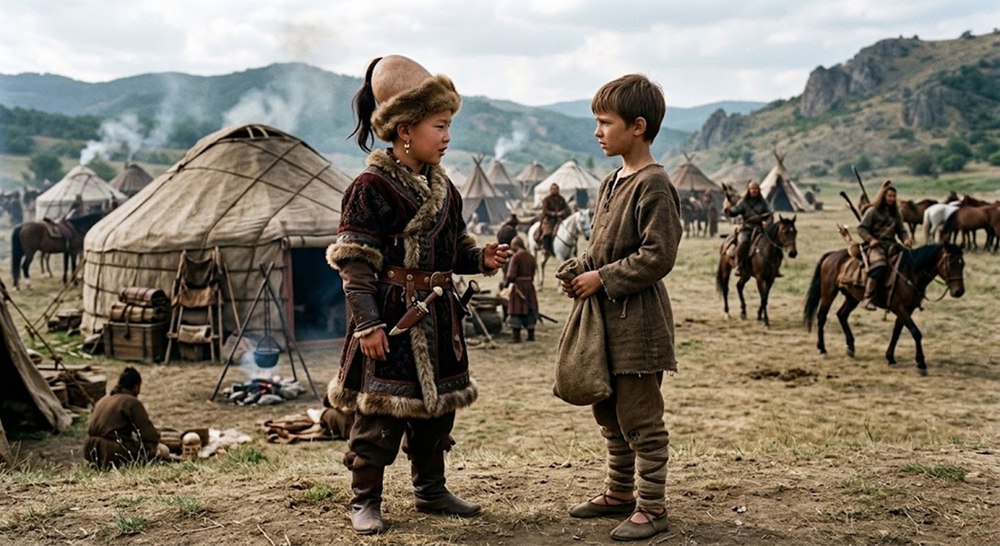
The site contained the remains of two children of different ethnic origins and social statuses who shared a single grave. Jakub Niebylski and his team identified the first child as a boy aged 8 to 9 years. DNA analysis linked his ancestry to Central Asia, likely the regions of Kazakhstan or Kyrgyzstan.
This boy belonged to the Huns, a nomadic confederation of warriors from the steppes of Asia Central. He possessed a high social status, evidenced by a rich inventory of gold and silver ornaments, a leather-bound skull deformed into an elongated shape, and a metal knife. The second child, aged 7 to 9 years, originated from Central Europe and possessed a lower social status as he was buried without any personal belongings.
Researchers believe this boy was a slave captured from a nearby village during a raid. The burial rituals for the two boys differed; the Hunnish boy lay face up, while the European boy lay face down with his head moved toward his feet. Anita Szczepanek and her colleagues suggest the European boy may have been human sacrifice to accompany the Hunnish boy into the afterlife.
The smooth state of the European boy's bones suggests his body might have been boiled before burial. The grave also contained the remains of a dog, a cat, and a bird. The Hunnish boy likely died of a chronic condition, such as leukemia, as his bones showed signs of severe anemia.
Selected and summarized by local AI How we work