Photographer’s work captures vanishing mountain life
Summary and headline written by AI from the source article. How we work
In Portugal, the work of Domingos Dias Martins, a self-taught photographer from the early to mid-20th century, recently received renewed attention through an exhibition and accompanying photo album organized by the Ochre Space gallery.
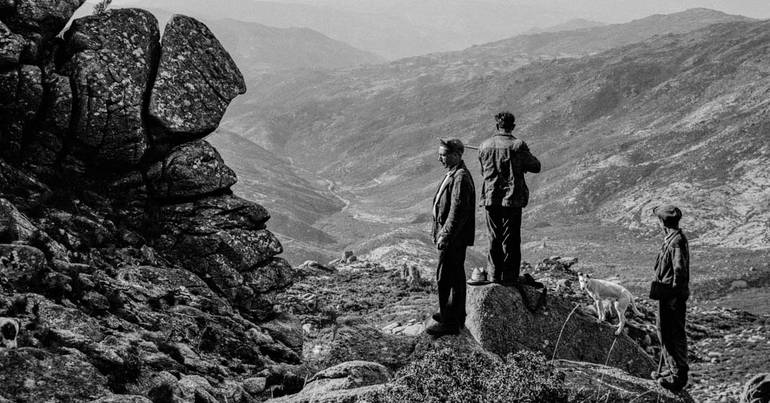
Dias Martins focused his lens on the remote mountain region of Cela in Montalegre, documenting the lives of its residents and a traditional way of life.
Born in 1919, Dias Martins spent his childhood in Lisbon after his mother took a position as a domestic servant, but he consistently returned to photograph the people and landscapes of his ancestral home. The exhibition brought together a diverse group including photographers António Barreto and João Miguel Barros, filmmaker Luís Filipe Rocha, lawyer Francisco Teixeira da Mota, geographer Jorge Gaspar, and others who recognized the importance of preserving Dias Martins' work.
Rocha detailed Dias Martins’ life, noting he worked for forty years at the National Propaganda Secretariat while pursuing photography as a passion. Dias Martins used a series of cameras over the years, beginning with a Kodak Brownie and later using Ikonta and Canon models.
Gaspar contextualized the photographs within the broader changes occurring in the region, noting that the population of Cela decreased from 567 inhabitants in 1950 to 143 today, reflecting the decline of a traditional agricultural and pastoral culture. Dias Martins’ photographs reveal a community defined by mutual support and a way of life that was slowly disappearing, a theme also explored by writer Miguel Torga in his work about the same region.
The future of Dias Martins’ photographic collection remains uncertain, as he expressed concern about its preservation and resisted offers to sell it during his lifetime.