Great Pyramid of Giza may have served as message
Summary and headline written by AI from the source article. How we work
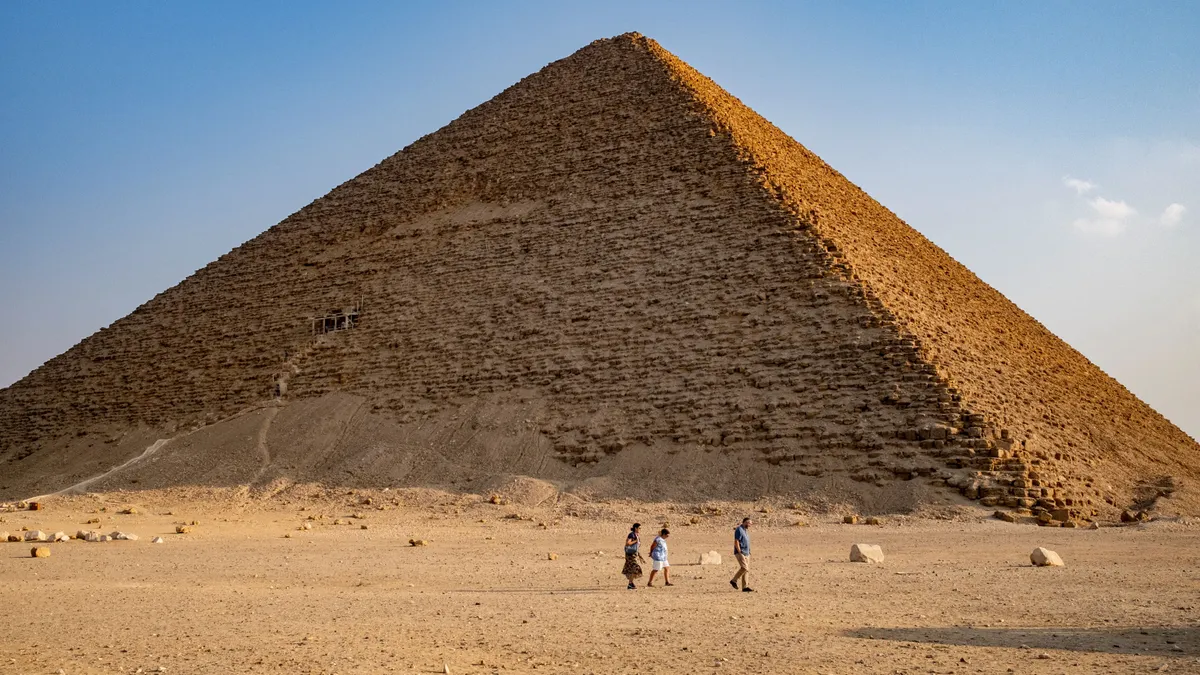
Sefy Levy, a researcher, proposes the Great Pyramid of Giza in Egypt was not primarily a tomb for Pharaoh Hufu, but a message encoded in its shape and dimensions.
Levy analyzed the pyramid using fractions employed by ancient Egyptian scribes, identifying numbers that align with significant natural cycles. He found that 27.5 closely corresponds to the period between the Moon’s closest approaches to Earth, and 70 resembles the duration Sirius disappears from view due to the sun’s glare.
Levy believes these connections suggest the pyramid was designed to preserve knowledge of mathematics, time, and the heavens. He argues the pyramid itself is knowledge, sculpted in stone, rather than a container holding it. His study, titled “The Pyramid As Memory”, suggests the structure aimed to memorialize a complete ancient world before it was lost to time.
However, Levy’s theory remains speculative because his study has not undergone peer review, and no ancient texts directly link the pyramid’s dimensions to astronomy or a phenomenon called the Eye of the Sahara. Experts note the measurements and astronomical values were previously known, meaning the observed similarities could be coincidental. The prevailing explanation, that the pyramid was part of Pharaoh Hufu’s burial complex, remains stronger, though Levy’s work encourages considering a broader symbolic meaning for the structure.
/nginx/o/2026/09/16/17921597t1h305d.jpg)