Researchers identify new parasitoid wasp species in Canada
Headline and summary by local AI
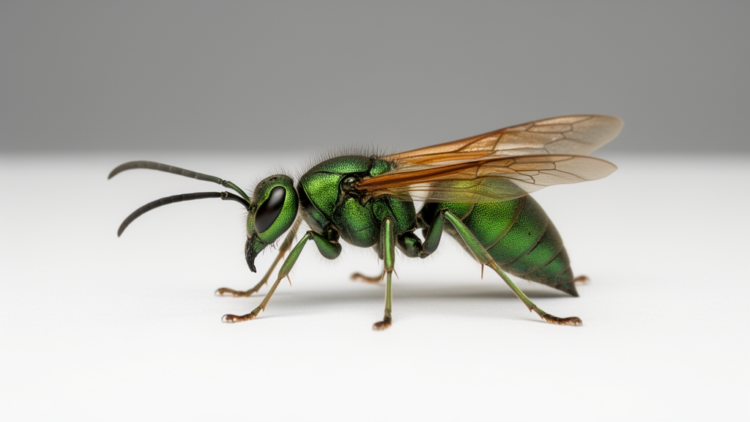
Researchers at Université Laval in Québec City have formally described a new species of parasitoid wasp named Gonatopus quebecensis.
The team identified the insect by combining physical examinations with DNA barcoding on specimens raised in a laboratory greenhouse. This new species belongs to the Dryinidae family, a group of wasps that parasitize leafhoppers and planthoppers. The scientists reared the wasps under controlled conditions to link them to their primary host, a leafhopper called Macrosteles quadrilineatus.
Both the wasps and the host insects came from highbush blueberry fields in the Mauricie region of Québec. This rearing process allowed the researchers to confirm that the wasps specifically target this leafhopper, which is common in Canadian agricultural areas and can spread plant diseases. The study addressed the difficulty of identifying these wasps because the males and females look very different.
The wingless females measure 2.97 millimeters in length, while the winged males have distinct genital structures used for identification. Genetic analysis of the cytochrome c oxidase subunit I gene confirmed that the specimens belong to a unique group. The researchers also found that the species likely lives in both Québec and Ontario, as their DNA matched larvae previously collected in those provinces. The discovery brings the total number of known Gonatopus species in the Nearctic region to 55.
The researchers noted that while the wasp is linked to an economically important host, they still need to conduct more surveys to determine its full host range, seasonal patterns, and role in biological control.
Selected and summarized by local AI How we work
Discovery: Archaeology, new knowledge of art, culture and history, forgotten history uncovered, something lost restored.