Village schooling memories in hue provide a foundation for local children
Headline and summary by local AI
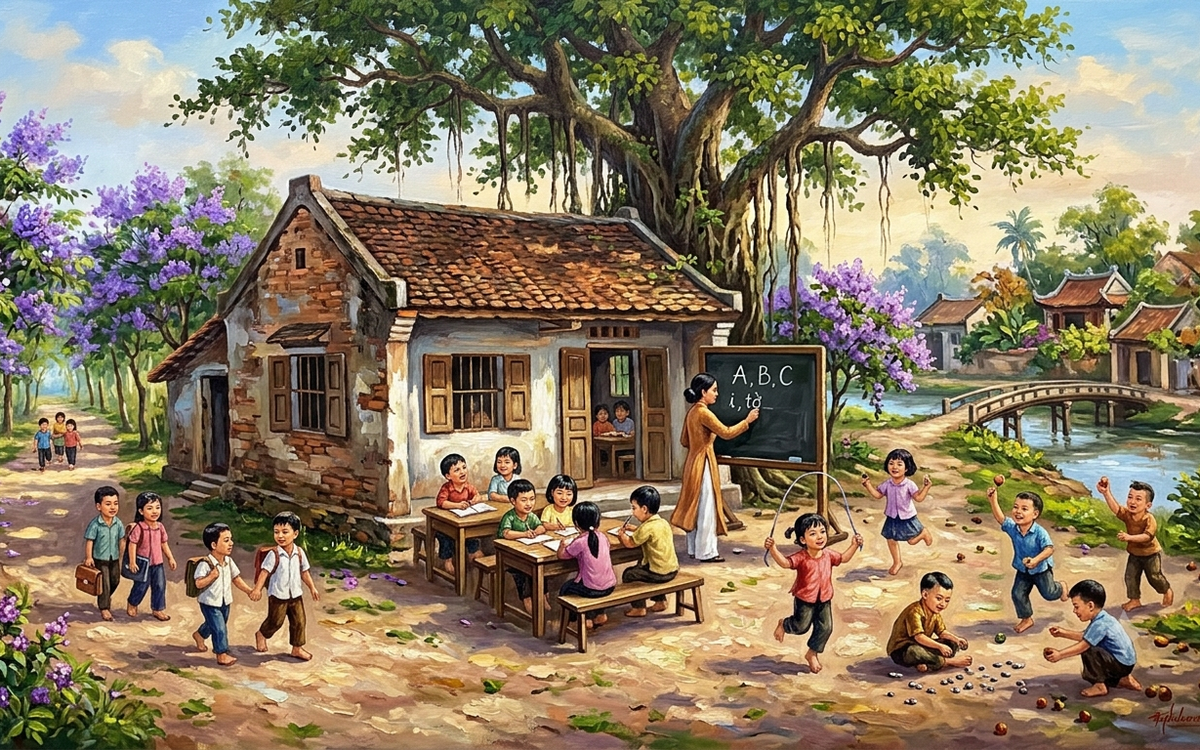
Children in the Liễu Cốc Hạ village in Huế, Vietnam, attended a small local school where they learned their first letters and basic literacy.
Before the establishment of the village school, families in the rural area faced difficulties accessing education. Only a few families with the means could send children to town or district schools. The creation of the village school allowed children aged 5 to 6 years to study near their homes.
This change allowed parents to work in the fields and engage in trade while their children stayed sheltered from the sun and rain. The school served as a primary site for learning to read, write, and spell. Students stayed at the village school until they finished the equivalent of first grade before moving to the commune school in Hương Cần for further education.
One woman, who taught at the school for many decades, knew the names and personalities of nearly every student. She remained a dedicated educator until her retirement, helping many local children begin their academic journeys. The village school has since been modernized. The original site now serves as a preschool and a community space, while a new facility with two multi-story buildings and a large playground was built at the end of the village road.
While the physical structures have changed, the local community continues to remember the school as the place where they received their first lessons in the Vietnamese alphabet.
Selected and summarized by local AI How we work
Belonging: Community bonds, rootedness, and living cultural practices and heritage.