The Mystery of the Golden Coffin
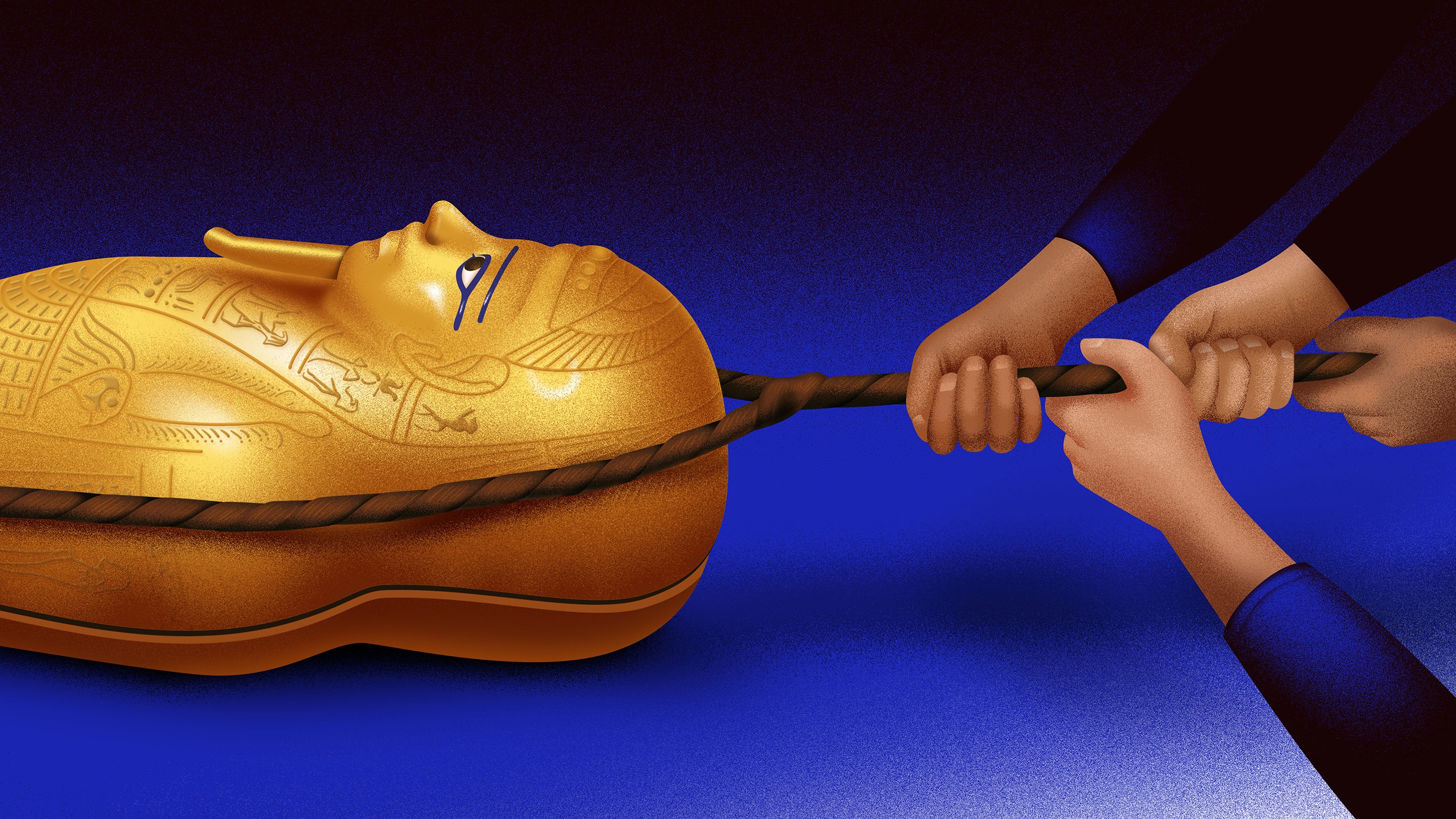
Okay, here's a breakdown of the lengthy article, covering its key themes, arguments, characters, and implications. I'll organize it into sections for clarity.
I. Core Narrative & Main Argument
The article is a deep dive into a decades-long scheme to traffic looted Egyptian antiquities, facilitated by the Simonian family and enabled by a network of museums, scholars, and a French cultural initiative. The central argument is that the global art market, despite decades of treaties and ethical pronouncements, remains deeply compromised by illicit trade, and that institutions are often willing to prioritize acquisition and financial gain over verifying provenance and upholding ethical standards. It's not just about the thieves, but the system that allows them to operate.
II. Key Players & Their Roles
The Simonian Family (Serop, Simon, Hagop, and their children): The core of the trafficking operation. Serop, the patriarch, is the central figure, a charismatic and ruthless dealer who built a business on acquiring (and likely illegally excavating/removing) Egyptian artifacts.
He was the "face" of the operation, while his brothers handled finances. The children are later implicated in money laundering and fraud. Habib Tawadros & Sayed Pasha Khashaba: Early sources for the Simonians, providing a narrative of "legitimate" acquisition from older collections.
This is a key part of the laundering of the artifacts' history. Roben Dib: A key intermediary and fixer, accused of being the financial architect of the scheme, and increasingly taking control as Serop aged. Jean-Luc Martinez: The former director of the Louvre Museum and a key figure in the Agence France-Muséums (AFM), the French agency established to advise the Louvre Abu Dhabi. He's accused of complicity in fraud and money laundering, as the AFM essentially became a tool for acquiring illicit antiquities for the Abu Dhabi museum. Eleni Vassilika: A museum director in Germany and Italy who was one of the first to raise concerns about the provenance of Simonian's artifacts.
She serves as a critical voice, highlighting the failures of the art world to address this issue. Bogdanos: A French prosecutor who aggressively pursued the cases of looted antiquities. Simonian viewed him as a major threat.
III. The Mechanics of the Scheme
Early Acquisition (1960s-70s): The Simonians claimed to have acquired artifacts from the heirs of Tawadros and Khashaba, establishing a (false) timeline of legal ownership before Egypt tightened its antiquities laws. "Laundry" through Museums: The Simonians strategically exhibited artifacts in museums (like the Roemer and Pelizaeus in Germany) to "legitimize" them and increase their value. This also provided a cover for their illicit trade. The Louvre Abu Dhabi: The AFM, under Martinez, became a crucial channel for acquiring artifacts. The AFM was supposed to ensure proper provenance checks, but it appears to have largely ignored red flags. Financial Incentives: The Louvre Abu Dhabi's payments to France, intended for museum renovations, indirectly funded the trafficking scheme. * Exploiting Loopholes & Lack of Enforcement: Egypt’s antiquities laws were often poorly enforced, and the international art market lacked robust mechanisms for verifying provenance.
IV. Key Themes & Motifs
Complicity & Enabling: The article emphasizes that the trafficking wasn't solely the work of criminals, but a result of a network of enablers—museums, scholars, and officials who turned a blind eye or actively participated. The Value of Provenance: The importance of establishing a clear, verifiable history of an artifact's ownership is central. The Simonians skillfully manipulated provenance to mask the illegal origins of their goods. Moral Compromise: The article highlights the moral compromises made by institutions and individuals in pursuit of prestige, financial gain, or political objectives. The Role of Collectors: While not explicitly focused on collectors, the demand for Egyptian antiquities fueled the looting and trafficking. * The Cycle of Looting: The article points out that waves of looting followed the increased Western fascination with ancient Egypt, and that Egypt's vast archaeological resources and limited protection made it vulnerable.
V. Implications & Broader Concerns
Erosion of Cultural Heritage: The looting of antiquities represents a loss of cultural heritage for Egypt and other countries. Damage to Museum Credibility: The scandal damages the reputation of museums and raises questions about their ethical standards. Need for Stronger Regulations: The article calls for stricter regulations, improved provenance research, and greater transparency in the art market. The Responsibility of Scholars: It challenges scholars to be more critical of dealers and to prioritize ethical considerations over acce...
Surfaced by the Discovery lens — one of the vital signs ovr.news reads.
How we evaluated this
AI summary
read the original for the full story — Read on theatlantic.com . How we work →