New Jersey Resident’s Meteorite Stash Yields Clues to Life’s Origins
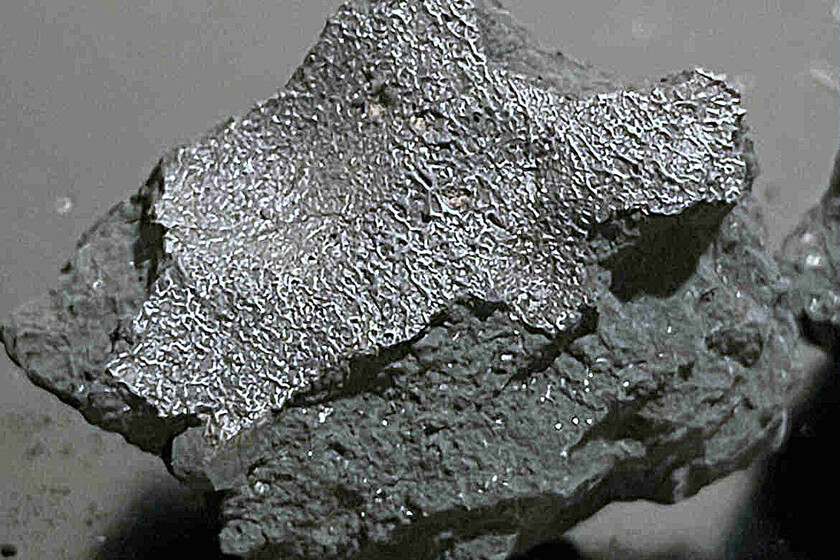
In Hillsborough, New Jersey, a homeowner preserved fragments of a 2024 meteor impact by carefully storing them in glass jars, a move that has aided scientists in understanding the early solar system. The meteor, a rare CM Ω carbonaceous chondrite, broke apart 35 kilometers above Earth, scattering debris across the region.
This particular type of meteorite is believed to contain organic molecules that could shed light on how life began on Earth. The homeowner’s quick action in collecting and preserving the fragments, after noticing a hole in his roof and smelling sulfur, allowed for a remarkably intact sample.
Scientists have determined the meteorite contains salts and a high percentage of carbon and nitrogen, suggesting it formed in an area where liquid water once evaporated on its parent asteroid. Further analysis of the meteorite’s isotopic composition may reveal the extent to which such objects contributed to the building blocks of life on Earth. Researchers are now focused on detailed analysis to understand the role these ancient space rocks played in the planet’s development.
Surfaced by the Discovery lens — one of the vital signs ovr.news reads.
How we evaluated this
AI summary
read the original for the full story — Read on xataka.com . How we work →