Spanish Scientists Propose Refilling Aral Sea to Capture CO2
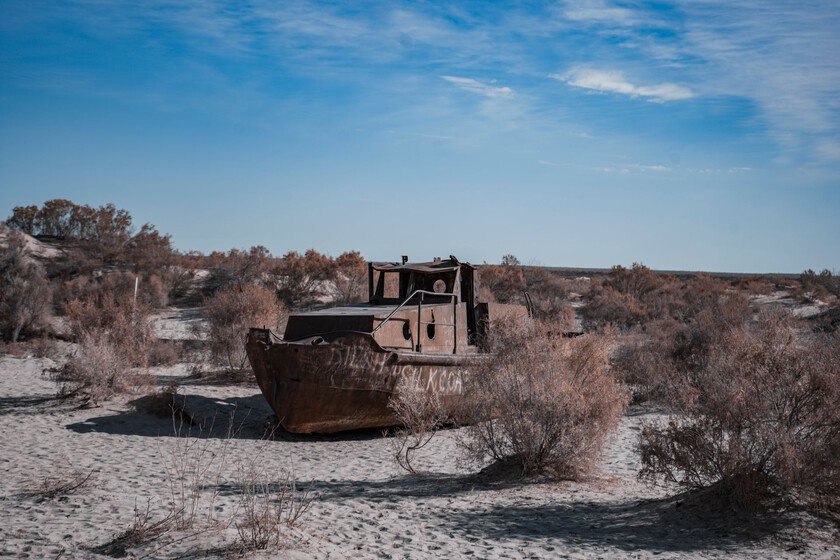
Spanish scientists are proposing a large-scale restoration of the Aral Sea, located between Kazakhstan and Uzbekistan, as a method to capture carbon dioxide and mitigate climate change. The Aral Sea has dramatically shrunk since the 1960s due to diverted river water used for cotton irrigation, becoming a major source of greenhouse gas emissions.
Researchers found the dried seabed has already released an estimated 748 million tons of CO2, equivalent to a year’s combined emissions from Spain, France, and Belgium. The exposed sediment, once sealed off from oxygen by water, now fuels microbial degradation releasing stored carbon.
Current reforestation efforts are ineffective in this arid environment. The scientists calculate that 605 million tons of CO2 remain trapped in the sediment, and propose a €8.5 billion modernization of the region’s irrigation system to recover 50% of the original lake surface. They suggest funding the project through the sale of carbon credits generated by the captured CO2.
Surfaced by the Solutions lens — one of the vital signs ovr.news reads.
How we evaluated this
AI summary
read the original for the full story — Read on xataka.com . How we work →