Ulises’s Seven-Year Detour: Was the Hero Stranded on a Spanish Isle?
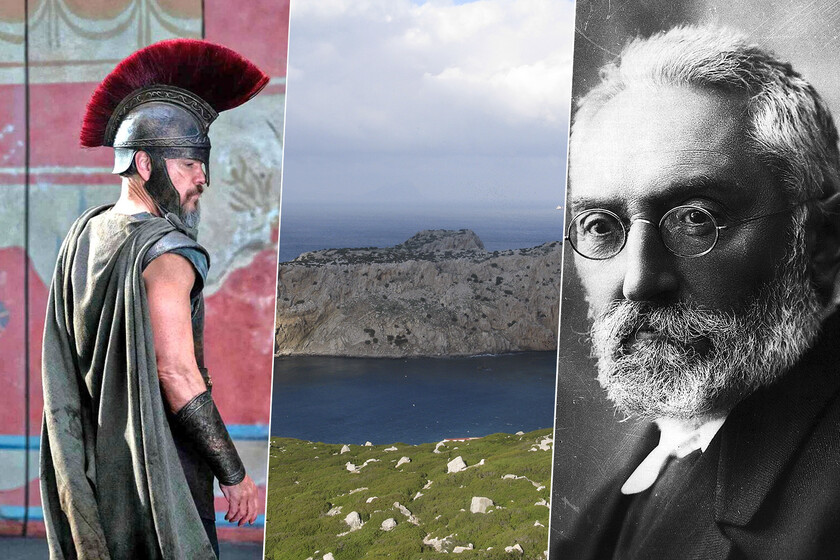
Victor Bérard, a French professor, proposed in 1902 that Homer’s Ulysses was held captive on the Spanish islet of Perejil, a 15,000 square meter landmass off the coast of Morocco, for seven years. Bérard used a method called "topology," seeking Semitic origins for Greek place names.
He linked the island of Ogigia, where Ulysses is held by Calypso, to Perejil, noting similarities between a cave described in The Odyssey and a cave on the islet. Bérard further theorized that the name “Spain” originates from “I-spania,” derived from the Greek word for “hidden,” referencing the islet’s secluded nature.
While the idea gained traction with writers like Miguel de Unamuno, later scholarship questioned the linguistic and literary basis of Bérard’s claims. Today, scholars identify numerous candidate islands for Ogigia, with Gozo in Malta being a longstanding contender. Despite lacking conclusive proof, Bérard’s theory remains a compelling counterpoint to interpretations of Homer that prioritize Greek origins and provides a unique lens through which to view the enduring myth.
Surfaced by the Discovery lens — one of the vital signs ovr.news reads.
How we evaluated this
AI summary
read the original for the full story — Read on xataka.com . How we work →