Spanish Researcher Proposes New Pyramid Construction Theory
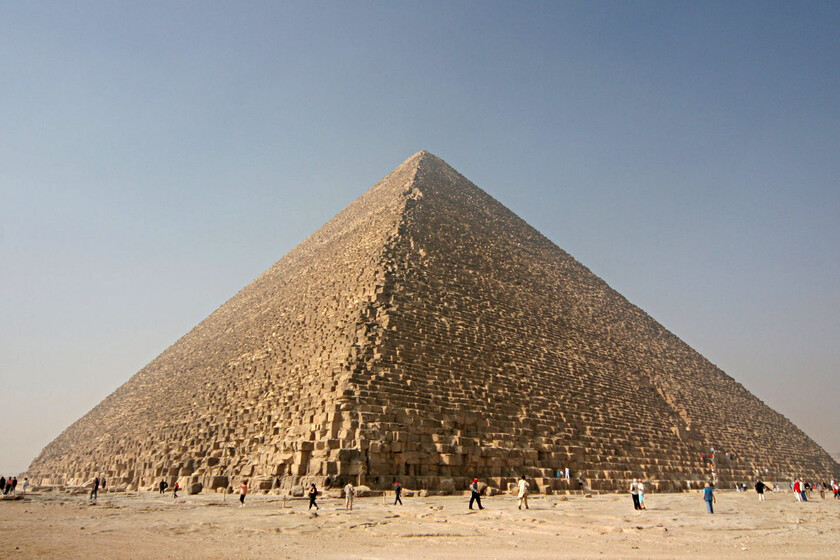
Why this is here: The Great Pyramid contains roughly 2.3 million stone blocks, requiring builders to place approximately one block every three minutes to complete it within Khufu’s reign.
Vicente Luis Rosell Roig, a Spanish researcher, proposes a new theory about how the Great Pyramid of Giza was built in Egypt. Rosell suggests the solution wasn’t lost technology, but integrated geometry—specifically, an internal helical ramp system built within the pyramid’s edges. He modeled the pyramid in 3D, discovering that multiple ramps operating simultaneously would have allowed for a constant flow of blocks, placing roughly one every three minutes for over twenty years.
This “Integrated Edge Ramp” used unfilled corridors as temporary access ways, disappearing as construction progressed. The theory aligns with recent discoveries of internal cavities, like the “Great Void,” suggesting potential wear marks where ramps were sealed.
However, the study acknowledges that proving the theory requires finding these specific physical traces. Rosell’s work shifts the focus from impossible technology to efficient logistics and coordinated effort, suggesting the Egyptians understood geometry and workflow remarkably well. Research continues to refine the model and identify testable predictions.
Surfaced by the Discovery lens — one of the vital signs ovr.news reads.
How we evaluated this
AI summary
read the original for the full story — Read on xataka.com . How we work →