Sahrawi Lab Makes Medicines in Algeria
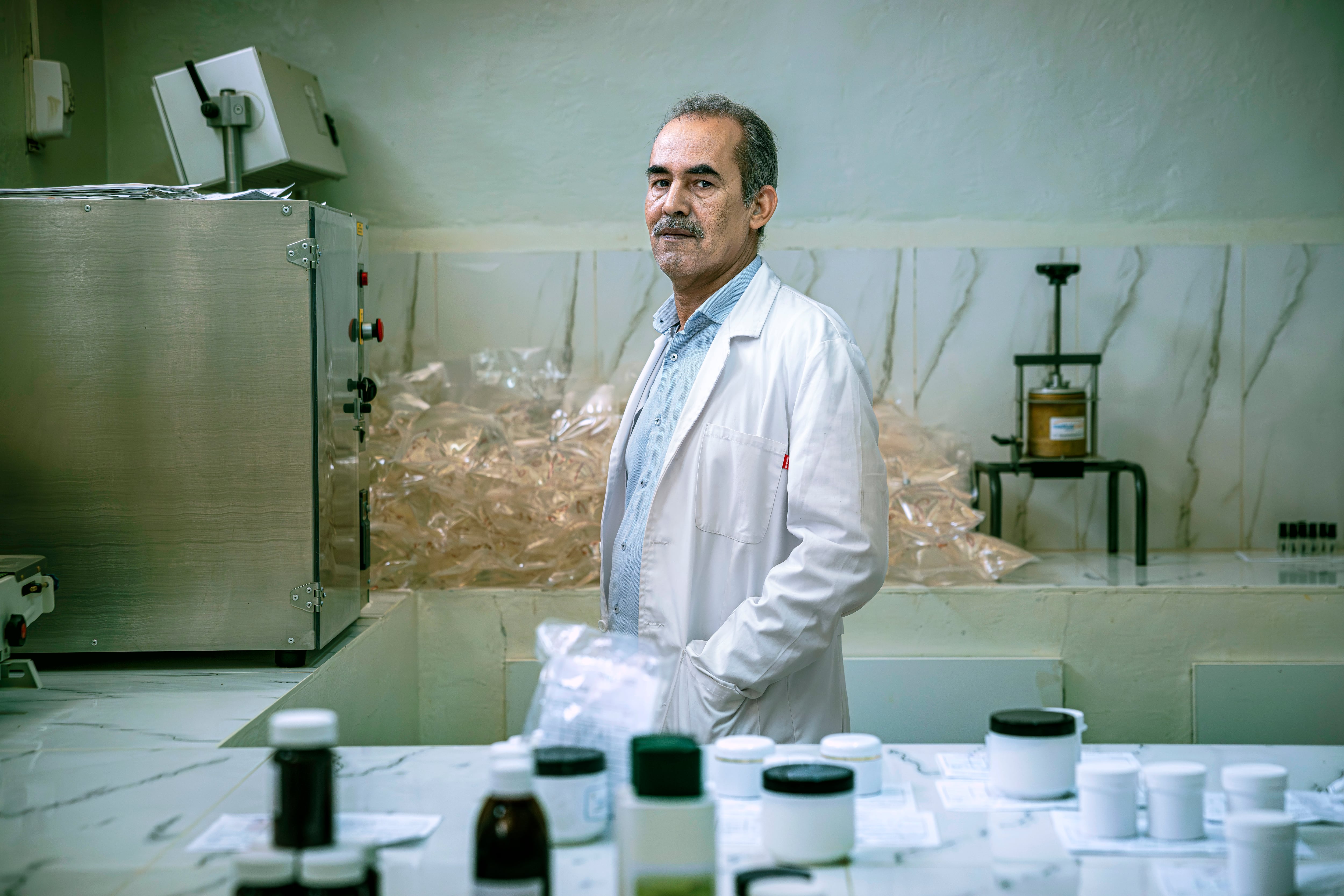
Why this is here: The laboratory successfully manufactured enough hand sanitizer to distribute throughout all five refugee camps during the 2020 COVID-19 pandemic, demonstrating local production capacity in a crisis.
In the Algerian desert of Tinduf, eleven Sahrawi workers manufacture antibiotics, eye drops, and dermatological creams for a refugee population that has been living in exile for half a century. The Mohamed Embarek Fakal·la Pharmaceutical Production Laboratory, often called “a rose in the desert,” began in 1992 with a visit from a pharmacist with Medicus Mundi Mediterrània who noticed a Sahrawi technician preparing antiseptic. Today, the lab produces roughly fifteen to twenty medications, covering about 5% of the camp’s needs.
The lab functions as an emergency reserve, having doubled production in 2010 to ensure access to essential medicines during a supply delay. In 2020, they began producing hand sanitizer in response to the COVID-19 pandemic, and currently cover 100% of the demand for saline solutions used in irrigation.
Despite this success, the lab faces ongoing challenges. Maintaining equipment is difficult due to a lack of specialized technicians, and securing funding has become increasingly complicated in recent years. While the team has begun integrating traditional Sahrawi medicinal plants to combat anemia and malnutrition, continued financial support is needed to expand production and reach more patients.
Surfaced by the Discovery lens — one of the vital signs ovr.news reads.
How we evaluated this
AI summary
read the original for the full story — Read on elpais.com . How we work →