Leonardo da Vinci depicted a quartz crystal in the Salvator mundi
Headline and summary by local AI
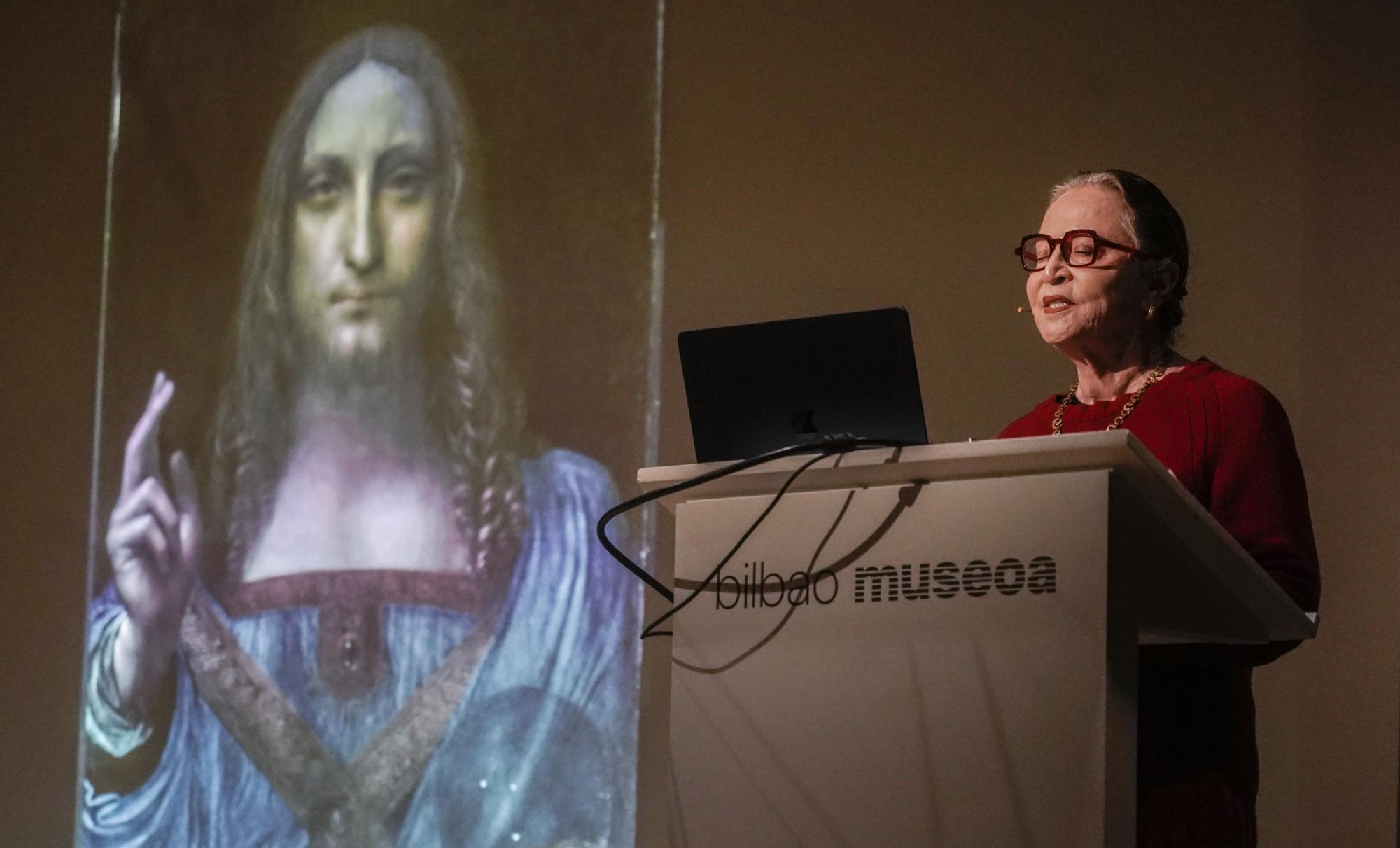
Juan Manuel Garcia-Ruiz and Dianne Modestini analyzed the Salvator Mundi painting to identify a specific detail in the hand of Jesus Christ.
The crystalographer and the restorer examined the work during the University of the Basque Country Science Week in San Sebastian and Bilbao. They focused on a colorful sphere held in the left hand of the figure. Garcia-Ruiz first noticed the sphere in 2017 while viewing the painting in New York.
He specifically observed a cluster of small bubbles within the sphere. The researchers later determined that the artist did not paint a simple bubble, but rather a quartz crystal. They reached this conclusion because bubbles in a liquid would appear perfectly round, whereas the artist painted the sphere as a geometric shape with distinct segments. The analysis shows that the artist used scientific precision to represent the crystal.
The folds of the tunic pass through the center of the sphere without distortion, which would only happen if the object was a solid crystal rather than a liquid bubble. Because quartz was a symbol for the divine during the 15th and 16th centuries, the researchers believe Da Vinci used the stone to represent a heavenly connection.
Selected and summarized by local AI How we work
Discovery: Archaeology, new knowledge of art, culture and history, forgotten history uncovered, something lost restored.