Ancient tombs in Vietnam reveal centuries-old artifacts
Summary and headline written by AI from the source article. How we work
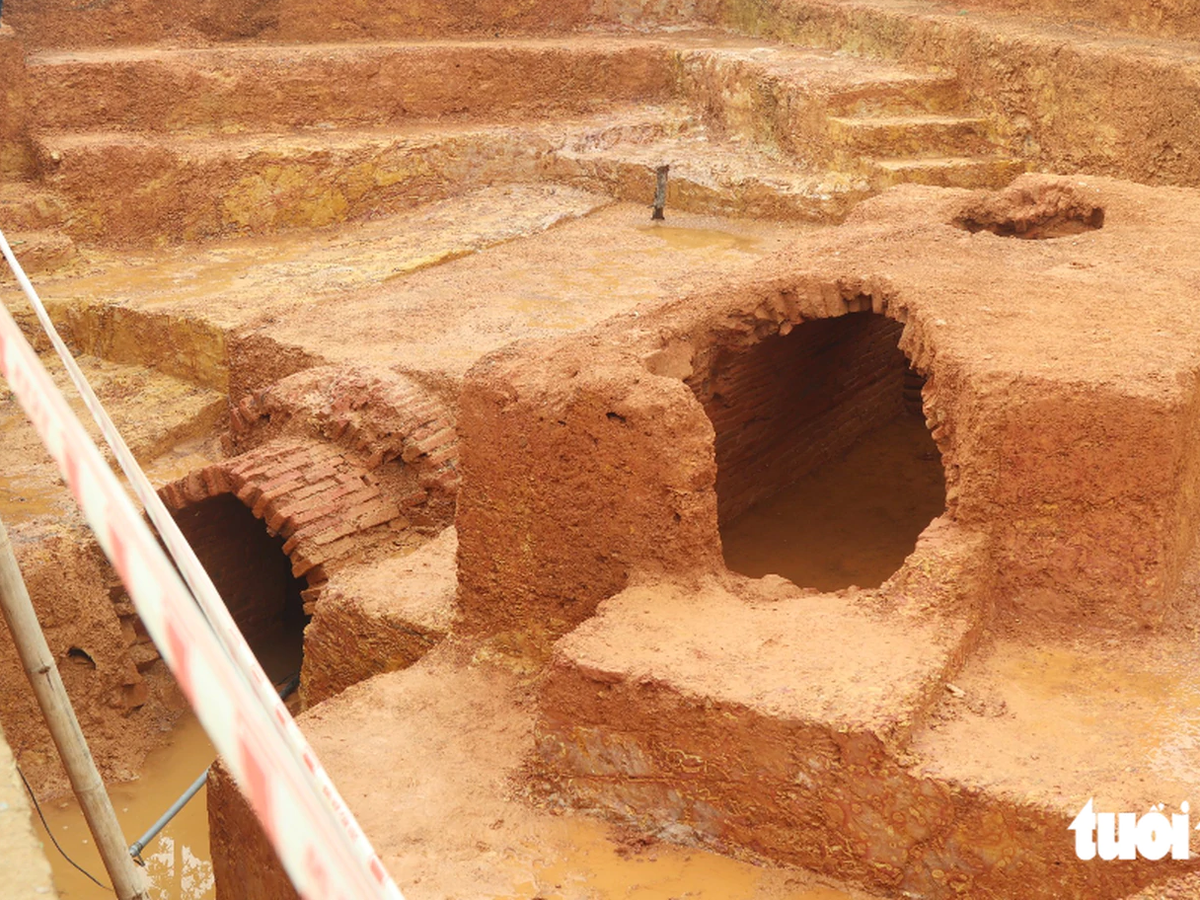
Archaeologists in Nghe An Province, Vietnam, recently investigated two 1,600-year-old brick tombs after a local resident, Tran Dinh Tuan, discovered one while gardening.
The Nghe An-Soviet Nghe Tinh Museum and the University of Social Sciences and Humanities led the excavation, uncovering burial chambers with pottery, swords, and jewelry. Both tombs shared a similar design with a burial pit, entrance passage, and chamber constructed from red and gray bricks, some decorated with patterns.
The artifacts from the first tomb, M1, included pottery, glass, and metal objects like coins, weapons, and tools, many of which were damaged. Archaeologists noted that swords and cleavers were deliberately crossed at the head of the tomb. The second tomb, M2, contained similar materials, pottery, stoneware, glass, and metal, but the artifacts were found in their original arrangement.
Researchers believe the tombs date to the Six Dynasties period, from the fourth to sixth centuries, based on their structure and the items within. These brick tombs, also known as Han tombs, were common near rivers that connected settlements to the sea. The team recommends protecting the site from damage and conducting further research throughout the Lam River basin to better understand the region’s archaeological history.