Kashmir shifts walnut farming to boost global competition
Summary and headline written by AI from the source article. How we work
In Jammu and Kashmir, India, farmers like Shabir Ahmad traditionally harvest walnuts from tall, seeded trees, a practice becoming increasingly dangerous as the region’s healthcare units treat dozens of fall-related injuries each year.
For generations, Kashmir has relied on growing walnuts from seeds, resulting in trees with varied fruit and making harvest difficult. However, J&K and Sher-e-Kashmir University of Agricultural Sciences and Technology (SKUAST) are now encouraging farmers to plant medium-sized, grafted walnut trees.
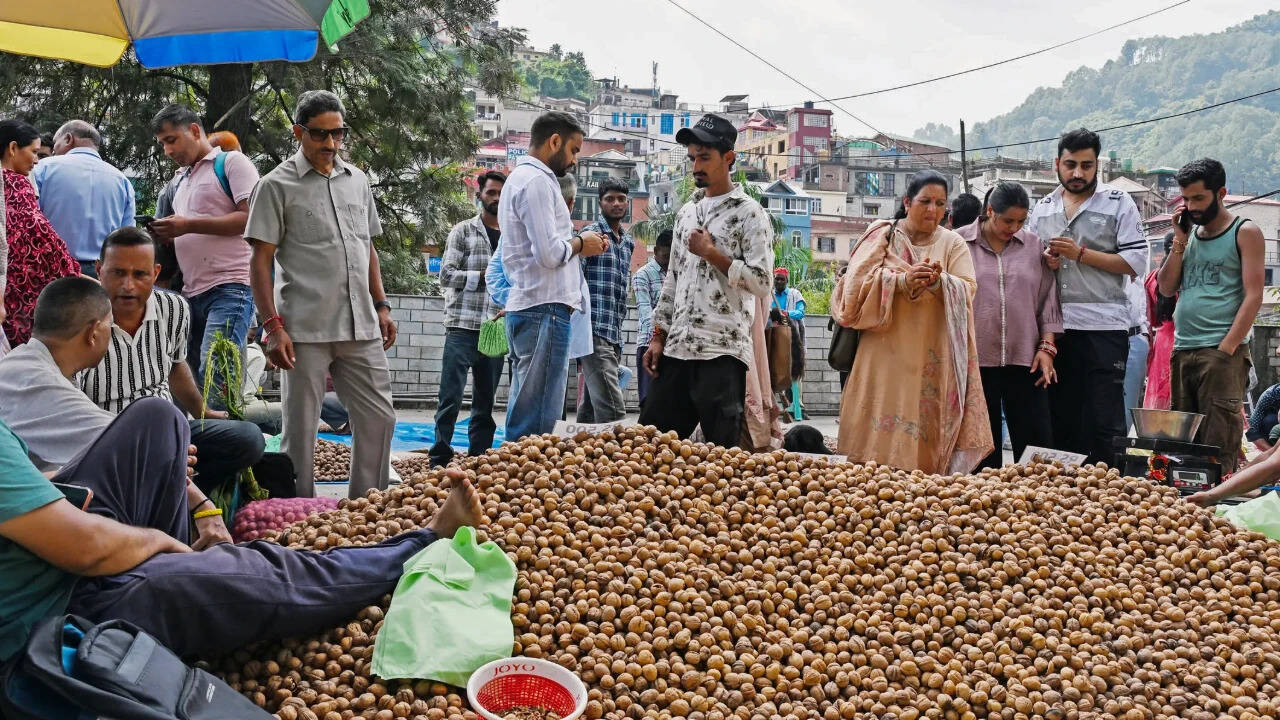
This change aims to create organised orchards with consistent walnut varieties, allowing farmers to grow more trees per area and compete with California and Chile’s soft-shelled walnuts in international markets. J&K currently produces 3.5 lakh tonnes of walnuts annually, accounting for around 90% of India’s total output, but its 80,000 hectares of walnut cultivation largely consist of these variable, seedling-origin trees.
Grafted trees offer faster returns and uniform nut quality, though some farmers like Mohammad Sultan argue the new varieties lack the flavour of traditional Kashmiri walnuts. The shift also impacts the region’s walnut woodcraft industries, as cutting walnut trees in J&K requires government permission. This restriction was debated in the assembly earlier this year when Chief Minister Omar Abdullah defended the law, citing the need to conserve both walnut and chinar trees.
Despite a lack of subsidies, grafting-based cultivation has already spread across nearly 90,000 hectares, with researchers seeing a gradual replacement of older trees.