Nepal’s Hill Farmers Abandon Fields to Monkeys
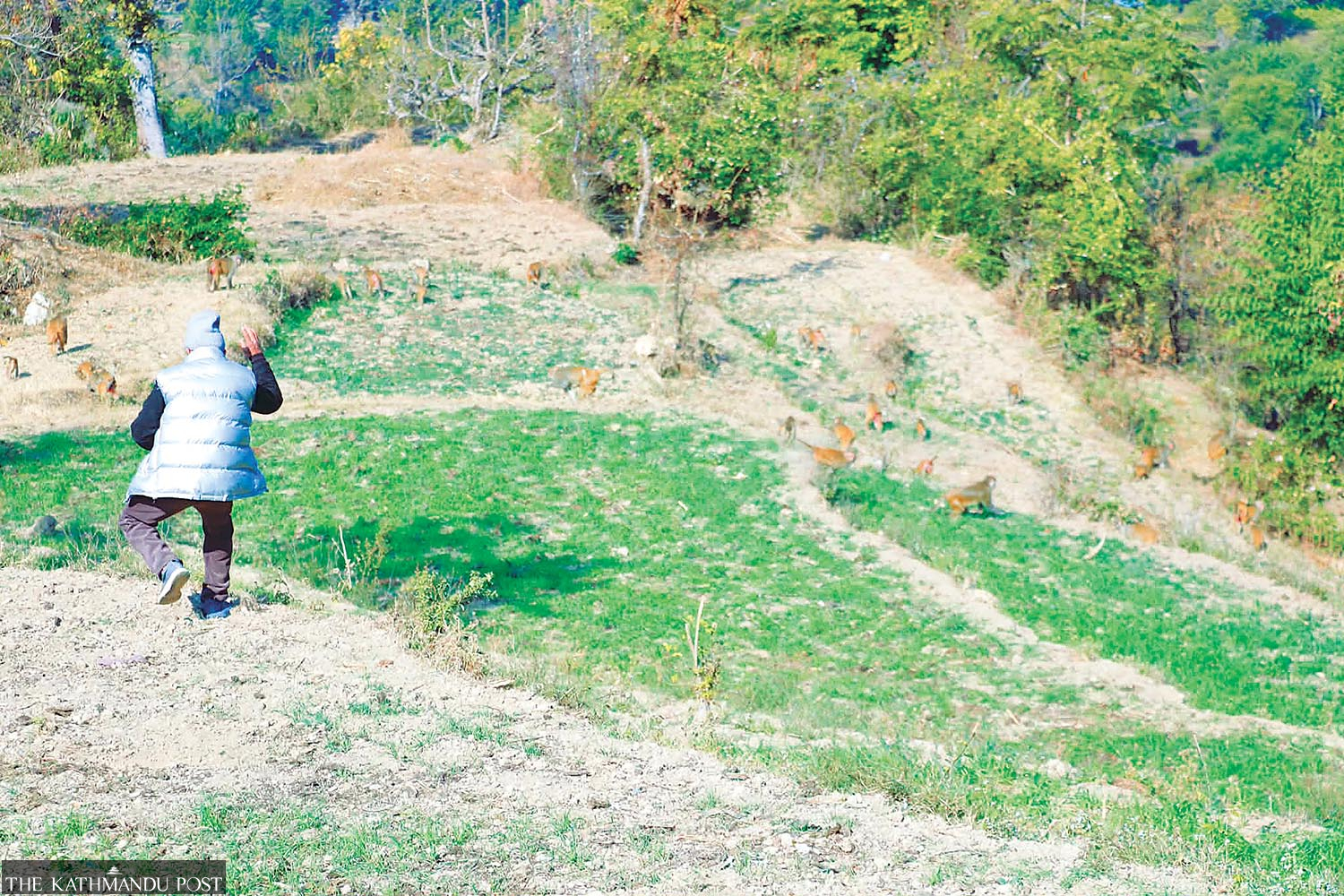
Across Nepal’s mid-hills, monkey troops are destroying crops and driving farmers from their land. From east to west, communities report increasing hardship as rhesus monkeys and langurs raid fields, emptying granaries and prompting migration. Farmers have tried various deterrents—fruit tree plantings, tree clearing, even gunfire—but report little success.
Laligurans Rural Municipality recently declared a holiday so residents could collectively guard their fields. In some districts, like Arghakhanchi, over 1,700 people now leave annually seeking safer livelihoods. One farmer in Dolakha died of a heart attack while attempting to chase monkeys from his maize field.
Local governments are experimenting with guards, traps, and ecological balance initiatives, but farmers say these efforts are insufficient. Nepal’s laws protect monkeys, restricting trade but offering no solutions for managing agricultural conflict. The country estimates a monkey population of around 500,000, requiring roughly 1,000 metric tonnes of food daily, half of which comes from cultivated land.
(Reporting contributed by journalists in Taplejung, Dhankuta, Khotang, Dharan, Palpa, Salyan, Baglung, Gulmi, and Arghakhanchi.)
Surfaced by the Recovery lens — one of the vital signs ovr.news reads.
How we evaluated this
AI summary
read the original for the full story — Read on kathmandupost.com . How we work →