Bengal women transform old textiles into narrative Nakshi Kantha art
Headline and summary by local AI
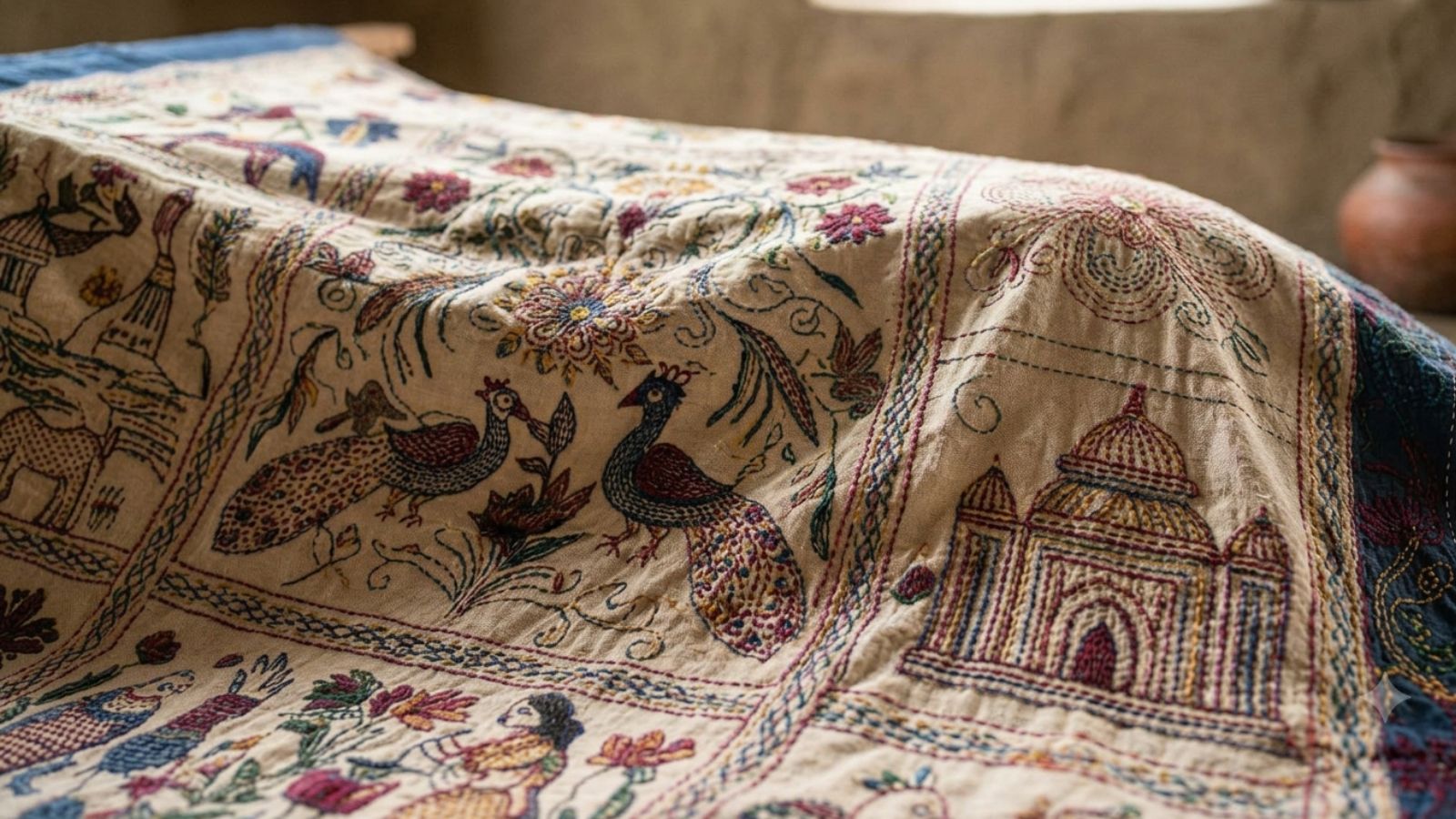
Rural Bengali women in the Bengal region, which includes present-day West Bengal in India and Bangladesh, created Nakshi Kantha by repurposing old cotton saris and dhotis into quilted textiles.
These women layered discarded fabrics and used simple running stitches to secure the material. This domestic practice evolved from a practical way to recycle household items into a form of folk art that expresses the personal experiences, creativity, and imaginations of the makers.
Malika Varma, Director of SHE Kantha, explains that the designs in Nakshi Kantha carry symbolic meanings. Common motifs include lotuses for purity, birds for freedom, and fish for abundance. Other designs depict the Tree of Life, human figures engaged in village rituals, and geometric patterns. These textiles served as a creative outlet during leisure hours, allowing women to record emotions like love and motherhood through needlework.
The production of traditional Nakshi Kantha is a labor intensive process that requires patience and precision. Artisans arrange the fabric layers, trace motifs, and use running stitches to create textured effects. While the craft is gaining popularity, Malika Varma notes that the tradition faces threats from machine made imitations and the difficulty of balancing slow handmade techniques with fast commercial demands.
She advocates for fair pay and the preservation of traditional stitching techniques to ensure the craft remains a viable livelihood for artisans.
Selected and summarized by local AI How we work
Discovery: Archaeology, new knowledge of art, culture and history, forgotten history uncovered, something lost restored.