Peru’s deposit insurance fund protects over 650,000 savers
Summary and headline written by AI from the source article. How we work
In the early 1990s, Peru established a Deposit Insurance Fund (FSD) to protect people’s savings after a period of high inflation. The fund began operating in 1991, and it first intervened in 1992 with Financiera Peruinvest, Banco Hipotecario, and Banco Popular, sometimes providing loans from the Ministry of Economy and Finance.
Prior to the FSD’s creation, Peru lacked a system to guarantee savings if a financial institution failed.
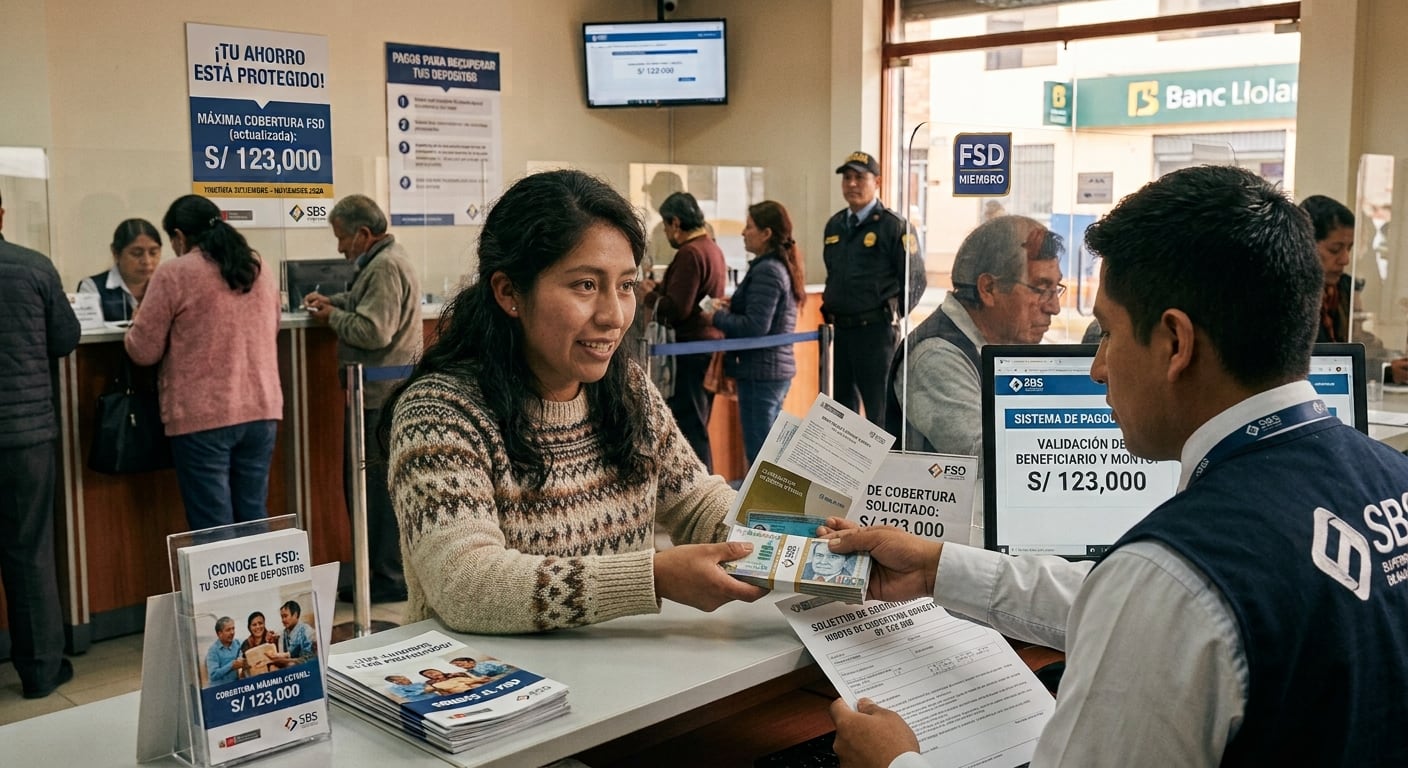
Financial institutions contribute regularly to the fund, building up a reserve to cover future payouts. Currently, the FSD insures deposits up to 123,000 Peruvian soles (approximately US$32,000) per person and per financial company, with the amount updated each quarter. The FSD has paid out around US$513 million to more than 650,000 depositors since its founding, covering cases like Financiera Peruinvest and Banco Bánex.
In recent interventions with Credinka and Caja Sullana, the fund wasn’t needed because the companies that bought them took on all assets and debts. As of the end of 2025, the fund held 10,674 million soles in assets, a 12.8% increase from the previous year. The fund also assists with the acquisition of troubled institutions by healthy ones, as seen when Caja Arequipa acquired Caja Rural de Ahorro y Crédito Raíz in 2023.
Experts note the fund wouldn’t be sufficient to cover all depositors in a widespread systemic event, but it provides essential protection and promotes confidence in Peru’s financial system.