Researchers use chemistry to investigate ancient Byzantine Greek fire
Headline and summary by local AI
Armaan Uppal and a team of researchers at Union College in the United States investigated the composition and mechanics of Greek fire, an incendiary weapon used by the Byzantine Empire.
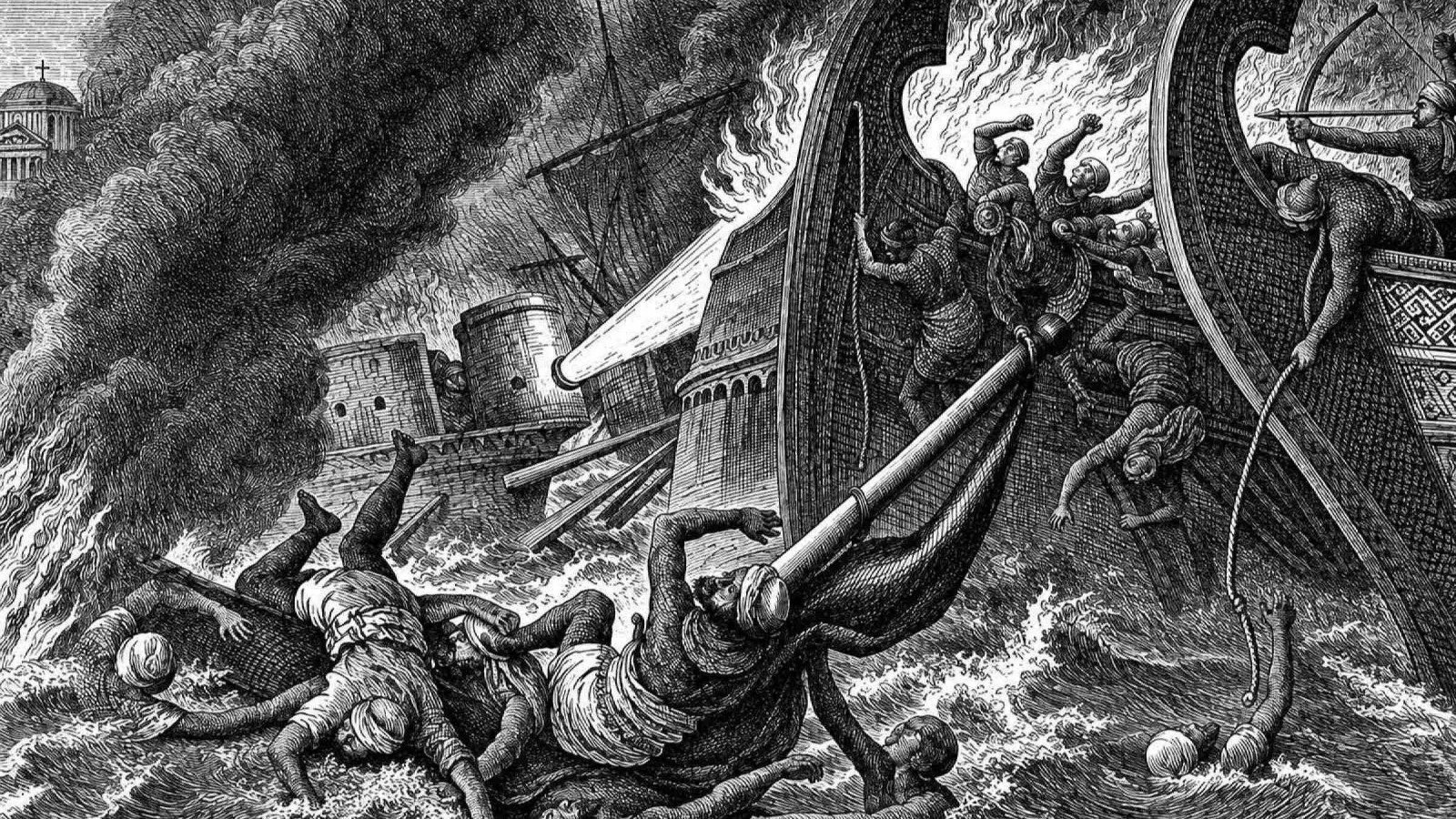
The study combined the analysis of medieval texts with chemical experiments to understand how the substance functioned during naval battles. The researchers examined historical accounts from authors such as the chronicler Teófanes the Confessor and the historian Ana Comnena.
These records describe a substance capable of setting ships ablaze and continuing to burn on top of water. Because no authentic recipe survived from the medieval period, the team used gas chromatography coupled with mass spectrometry to test various chemical hypotheses. The investigation supports the theory that the weapon contained a petroleum based substance. An oily material could remain on the water surface while burning, which matches descriptions in the historical records.
However, the researchers noted that demonstrating this possibility does not prove the Byzantines used that specific composition. The study also shifted focus toward the delivery systems used to project the substance from moving ships. The team viewed the weapon as a complete system involving the chemical mixture, storage methods, and launching mechanisms. While the research helps bridge the gap between ancient descriptions and modern chemistry, the exact original formula and full operational details remain unknown.
Selected and summarized by local AI How we work
Discovery: Archaeology, new knowledge of art, culture and history, forgotten history uncovered, something lost restored.