Haitian farmers’ movement marks 40 years of resistance
Summary and headline written by AI from the source article. How we work
For 40 years, Tèt Kole Ti Peyizan Ayisyen, a national farmers’ organization in Haiti, has worked to organize rural communities and defend their rights against exploitation.
The group formed in the 1970s during the dictatorship of François and Jean-Claude Duvalier, initially meeting secretly in fields to avoid repression from the authorities and paramilitary groups known as “Tonton Makoute.” They officially established themselves in 1986, after the fall of the Duvalier regime, and have since mobilized people in all ten of Haiti’s departments. The organization focuses on securing basic rights like identification and access to services, promoting sustainable agriculture, and advocating for Haiti’s sovereignty.
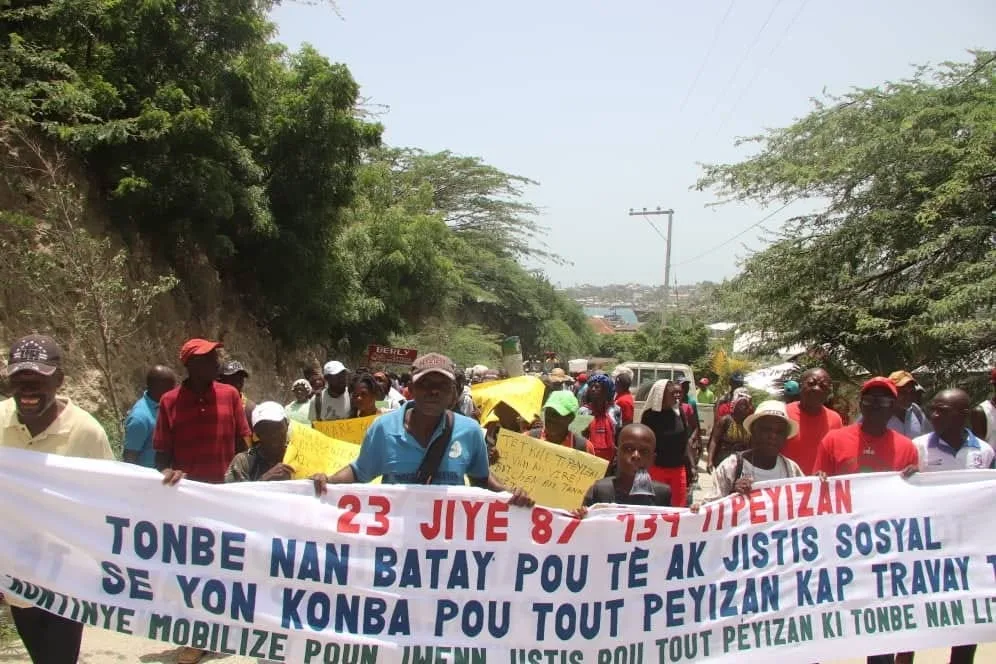
Despite facing ongoing violence and systemic marginalization, including the 1987 Jean Rabel massacre where 139 farmers were killed. Tèt Kole has continued to support rural communities and fight for land rights. Currently, gang violence and blocked roads are preventing large-scale celebrations of the organization’s 40th anniversary. Instead of a national event, Tèt Kole will hold local meetings over the coming months to reflect on their work and plan for the future.
The movement also collaborates internationally with groups like CLOC-Via Campesina and maintains a strong partnership with Brazil’s Landless Workers’ Movement (MST), sharing strategies and solidarity. They believe Haiti’s current crisis stems from a long history of colonialism and external interference, and that lasting change requires a fundamental restructuring of the state.