Researchers discover 280 Ice Age engravings in a Catalan cave
Headline and summary by local AI
Archaeologists from the Catalan Institute of Human Paleoecology and Social Evolution (IPHES) identified approximately 280 Paleolithic engravings in the Cova de la Font Major cave system in Catalonia, Spain.
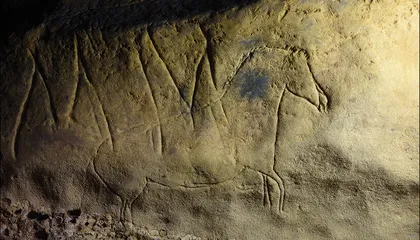
The team discovered the markings during a series of excavations in 2019. These engravings include 55 different animals, such as horses, deer, a bear, and early types of wild cattle, alongside various abstract patterns and lines.
Researchers estimate the artworks are roughly 26,000 years old based on radiocarbon dating of charcoal found within one of the engraved grooves. The discovery is notable because the cave has been visited by tourists and explorers since at least the 12th century. The site even hosted a museum in the 1990s. Researchers believe the engravings remained hidden because the cave walls have irregular colors and textures, and the markings are difficult to see when lit directly from the front.
The team suggests that specific lighting angles are necessary to reveal the depressions in the rock. The findings suggest that Catalonia has a much richer Paleolithic history than previously understood. The researchers noted that the art style is distinct from the neighboring Franco-Cantabrian region. Some of the inscriptions may represent bodies of water or land, and at least 20 markings appear to depict movement, suggesting a form of prehistoric animation.
While the team has not determined if the cave served as a shelter or a site for rituals, they state the discovery establishes a unique Mediterranean graphic tradition.
Selected and summarized by local AI How we work