Vatican restorers discover Michelangelo used multi-headed brushes
Headline and summary by local AI
Vatican restorers discovered that Michelangelo used custom multi-headed brushes to paint The Last Judgment in the Sistine Chapel.
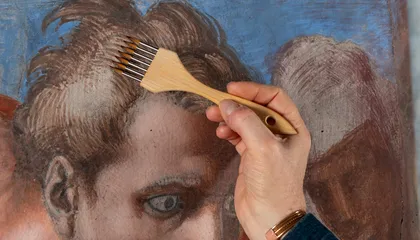
During a three-month restoration project in Italy, experts removed layers of calcium lactate, a salt formed from visitor sweat and wall plaster, to reveal the 16th-century murals. While cleaning the artwork, Paolo Violini, the chief restorer, noticed a unique crosshatching pattern in the paint.
He observed that parallel brushstrokes wobbled in identical ways, which indicated the artist used a single large brush with multiple heads to create synchronized lines. Analysis shows Michelangelo used at least two types of these tools, including a brush with three tips and another nearly six inches wide with 10 tips. These tools allowed the artist to replicate the techniques of a sculptor, specifically the cross-hatching pattern created by a multi-pointed chisel called a gradina.
This method helped him work faster while creating a rich interaction between the paint and light. The restoration also revealed hidden self-portraits by Michelangelo among the more than 300 figures in the mural. One portrait appears in the flayed skin held by St. Bartholomew, while a second, more subtle face is tucked into the cloak-folds of a figure representing Death.
Fabrizio Biferali, a curator at the Vatican Museums, says Michelangelo likely painted these faces after a fall from scaffolding in 1536 broke his leg and forced him to stop work for several months.
Selected and summarized by local AI How we work
More in Discovery
Henri Matisse painting transitions from rejection to Modern art masterpiece
openculture.com · 10 Nov 2026

Scientists find remote coral atolls with intact marine ecosystems in the Pacific
sciencealert.com · 11 Nov 2026

Researchers identify Cold War radar system on Suffolk coast
the-past.com · 7 Nov 2026