Volcanic ash preserved the Bronze Age settlement of Akrotiri in Greece
Headline and summary by local AI
Archaeologists in Greece are uncovering Akrotiri, a Bronze Age settlement on the island of Santorini that was buried by a massive volcanic eruption between 1620 and 1530 B.C.E.
The eruption of the Thera volcano produced one of the largest recorded volcanic events in history, releasing four times more material than the 1883 Krakatau eruption in Indonesia.
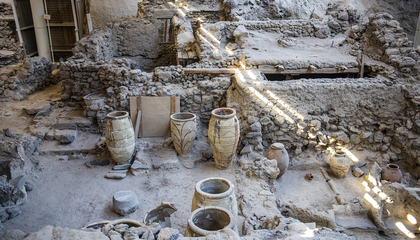
This cataclysmic event covered the city in approximately 200 feet of ash and pumice, creating a prehistoric time capsule similar to the ruins of Pompeii. Researchers have discovered that the residents of Akrotiri were a sophisticated seafaring society with access to maritime trade across North Africa, Europe, and the Middle East. The inhabitants built multistory buildings featuring paved streets, indoor plumbing, and intricate drainage systems.
Excavations have revealed well-preserved frescoes on walls depicting women and crocuses, which suggests that women played a key role in the local agricultural economy. The site also yielded pottery and jewelry that provide evidence of a complex social structure and a diet including barley and fava beans. Archaeologists began large-scale excavations in 1967 under Spyridon Marinatos to study the site.
Because the ruins are so well-preserved, experts had to build a special shelter to protect the structures from the elements while they worked. Current estimates suggest that researchers have only uncovered about 10 percent of the settlement. Interestingly, the lack of human remains at the site suggests that most residents successfully evacuated the city before the final eruption occurred.
Selected and summarized by local AI How we work