Scientists discover 19th-century manufacturing error in mangled silver coin
Headline and summary by local AI
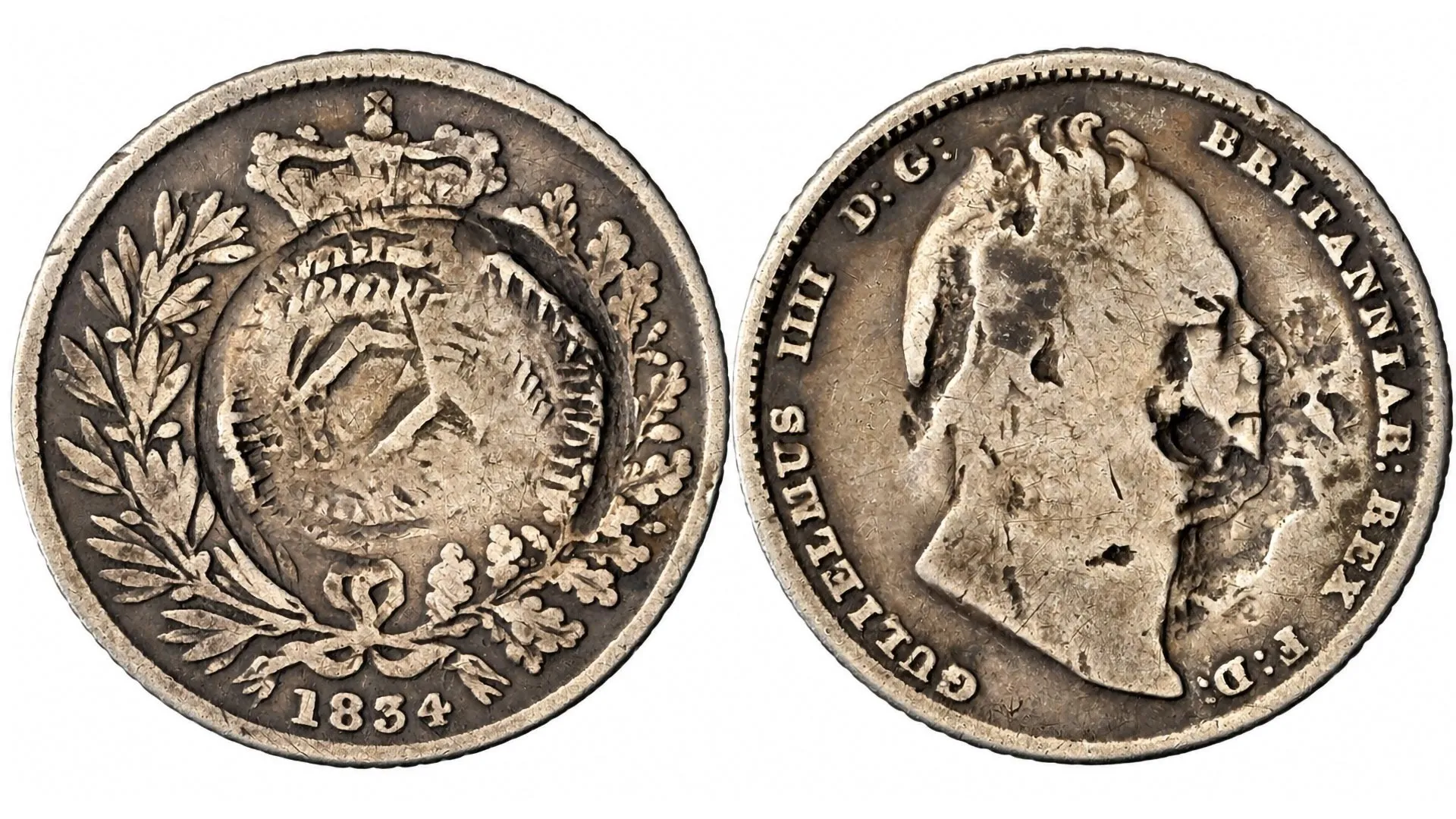
A researcher analyzed a severely deformed 1834 British silver sixpence to determine if its shape resulted from historical minting accidents.
The coin, which features the portrait of King William IV, was discovered in an album at a car boot sale in Greater Manchester, England. While the coin appears heavily crushed, its outer rim and edge grooves remain relatively intact, suggesting the damage did not come from typical wear or a single impact.
The author of the study used 3D surface measurements and microscopic analysis to examine the metal. These tests revealed deep depressions and overlapping patterns of displaced metal in the center of the coin. The data suggests the coin was subjected to repeated high pressure while its sides were restricted. This pattern matches a mechanical failure during the production process rather than gradual corrosion or circulation. The findings indicate the coin might be a rare survivor of a manufacturing defect.
During the 1830s, British mints used steam-powered presses and typically melted down coins with serious striking errors to reuse the silver. The researcher also used artificial intelligence to help organize observations and compare different theories before confirming the results with independent laboratory measurements.
Selected and summarized by local AI How we work