Bronze Age Europeans Adapted to Change
Why this is here: Communities experimented with a new crop from China—broomcorn millet—during the Late Bronze Age, then shifted back to traditional crops like wheat and barley, revealing a period of agricultural adaptability.
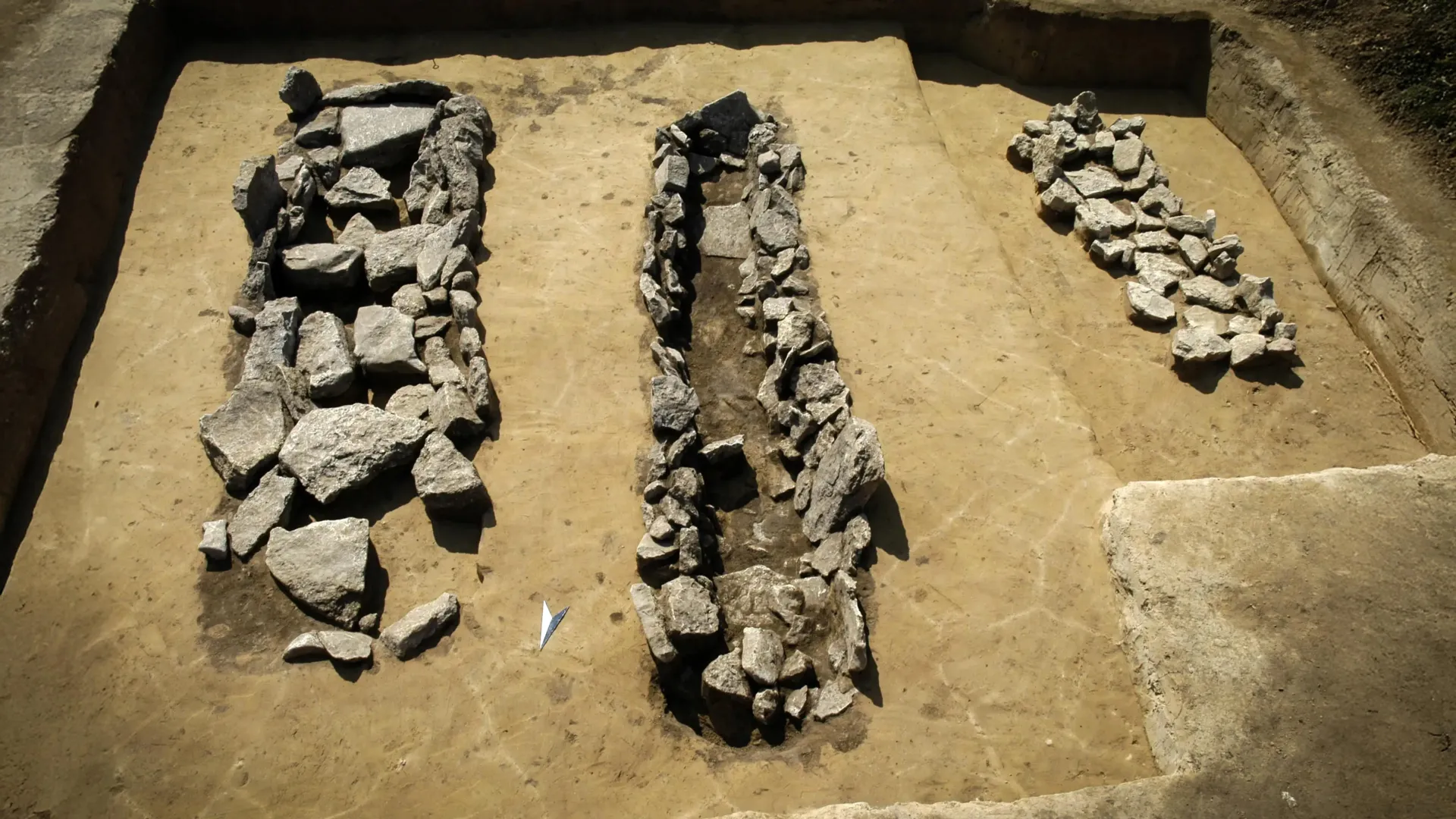
Scientists at the Max Planck Institute in Germany led a study of rare, uncremated burials from Germany, Czechia, and Poland. The research details life in Central Europe during the Late Bronze Age, roughly 1300 to 800 BCE, a period marked by cultural shifts. Researchers combined archaeology with ancient DNA, isotope studies, and skeletal analysis to reconstruct daily life for people living around 3,000 years ago.
The team found gradual changes in ancestry, suggesting communities connected with regions south of the Danube while maintaining local traditions. Isotope analysis showed most people stayed close to their birthplaces, indicating ideas spread through contact and trade, not mass migration. Communities began incorporating broomcorn millet—a crop originating in China—into their diets, then later returned to wheat and barley.
Skeletal evidence reveals physically demanding lives, with signs of stress and injuries, though no major epidemics. Burial rituals varied widely, with communities practicing cremation alongside traditional burials and unique rites.
The study acknowledges that the limited number of non-cremated burials presents a challenge for fully understanding the period. Further research will continue to refine this picture of a dynamic past.
Surfaced by the Discovery lens — one of the vital signs ovr.news reads.
How we evaluated this
AI summary
read the original for the full story — Read on sciencedaily.com . How we work →