Laos Jars Held Remains Over Centuries
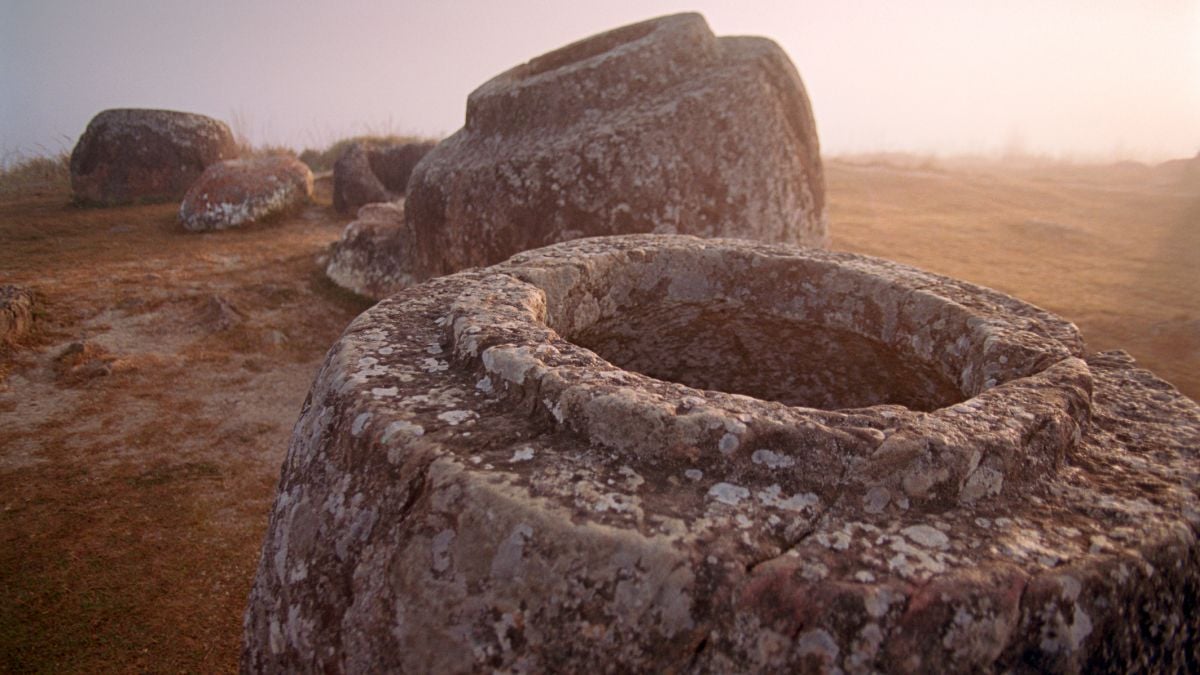
Why this is here: The glass beads found within the jar are made of materials originating from regions as far away as South India and Mesopotamia, suggesting extensive trade networks existed in Laos over 1,000 years ago.
Archaeologists in Laos excavated a large stone jar and discovered the remains of roughly 37 individuals. The team, led by Nicholas Skopal of James Cook University, worked at Site 75 on the Xiangkhoang Plateau from 2022 to 2024. They found bones deposited over a 270-year period, between 890 and 1160 CE, suggesting the jars served as places for ancestral rites spanning generations.
The jar, carved from conglomerate stone, also contained glass beads from South India and Mesopotamia. These beads indicate trade connections previously unknown to researchers. Alongside the bones, the team recovered pottery, a small bell, and an iron knife—items common in other burial sites.
Researchers believe the jars may have initially held remains for decomposition before a secondary interment. Many jars remain unexcavated and the region is still heavily contaminated with undetonated ordnance from the Laotian Civil War. Analysis of the bones continues, seeking to reveal more about the people and their relationships.
Surfaced by the Discovery lens — one of the vital signs ovr.news reads.
How we evaluated this
AI summary
read the original for the full story — Read on sciencealert.com . How we work →