Neolithic people in Türkiye experimented with fired clay 11,000 years ago
Headline and summary by local AI
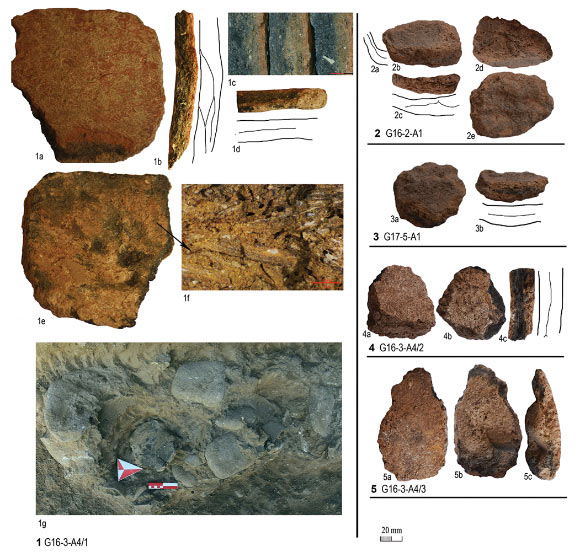
Archaeologists from Mardin Artuklu University identified 46 fired clay shards at Çemka Höyük, a Neolithic settlement in the Mardin province of Türkiye.
These fragments date to approximately 9350 BCE, marking them as some of the earliest known fired-clay containers in South-west Asia. The team found the pieces on the floors of various round and oval dwellings that were partially sunken into the ground. The researchers used X-ray diffraction and microscopes to determine how the objects were made.
They found that the minerals in the fragments underwent irreversible changes, which suggests that people deliberately heated the clay in bonfires to temperatures between 600 and 700 degrees Celsius. This evidence indicates that the community was testing the properties of the material rather than accidentally exposing it to heat. The variety of the fragments suggests that local people used clay for many different purposes in their daily lives.
Some pieces appear to be coatings for organic objects, while others are thick-walled containers made from layered clay and crushed plant matter. The scientists state that while these people were experimenting with clay, they did not yet rely on ceramics for their primary cooking or storage needs. This discovery shows that pottery development was a regional process of trial and error rather than a sudden, uniform change.
Selected and summarized by local AI How we work
Discovery: Archaeology, new knowledge of art, culture and history, forgotten history uncovered, something lost restored.