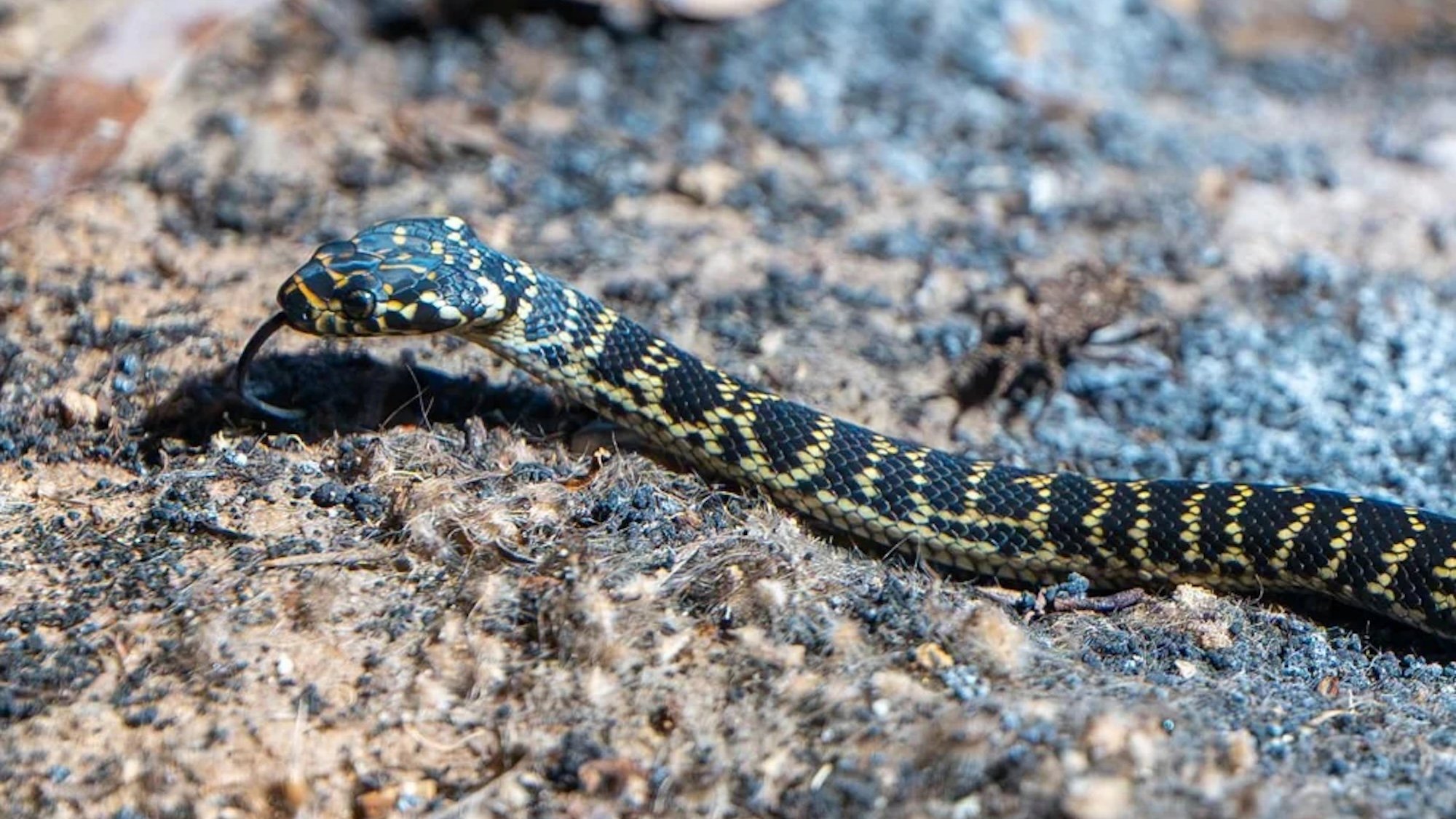
Artificial rocks help save threatened broad-headed snakes in Australia
Headline and summary by local AI
Ecologists at the University of Technology Sydney (UTS) successfully released captive-bred broad-headed snakes into the Australian bush.
The team collaborated with the conservation group Aussie Ark and Indigenous representatives of the Traditional Owners of the Shoalhaven region to breed the reptiles. Four out of the six juveniles released in May survived their first few months in the wild. The broad-headed snake faces a high risk of extinction because it matures slowly and only reproduces around five years of age.
Females mate only every two to three years, making the population vulnerable to climate change, habitat loss, and predators like cats or foxes. Human activity has further reduced their numbers because people remove natural bush-rocks from the environment to sell as landscaping materials. These rocks provide essential shelter and warmth for the snakes, which are nocturnal and rely on crevices to hunt prey like skinks and geckos.
To address these issues, the researchers created bespoke artificial rocks that mimic the thermal properties and measurements of natural geological formations. These structures provide the necessary protection for the snakes during the day. The team plans to expand the program to other areas in Australia and continue breeding more snakes to stabilize the population.
Selected and summarized by local AI How we work
Recovery: Ecosystems recovering, species returning, nature thriving or newly found, and protection already in force.