Homo erectus Shared Genes With Denisovans
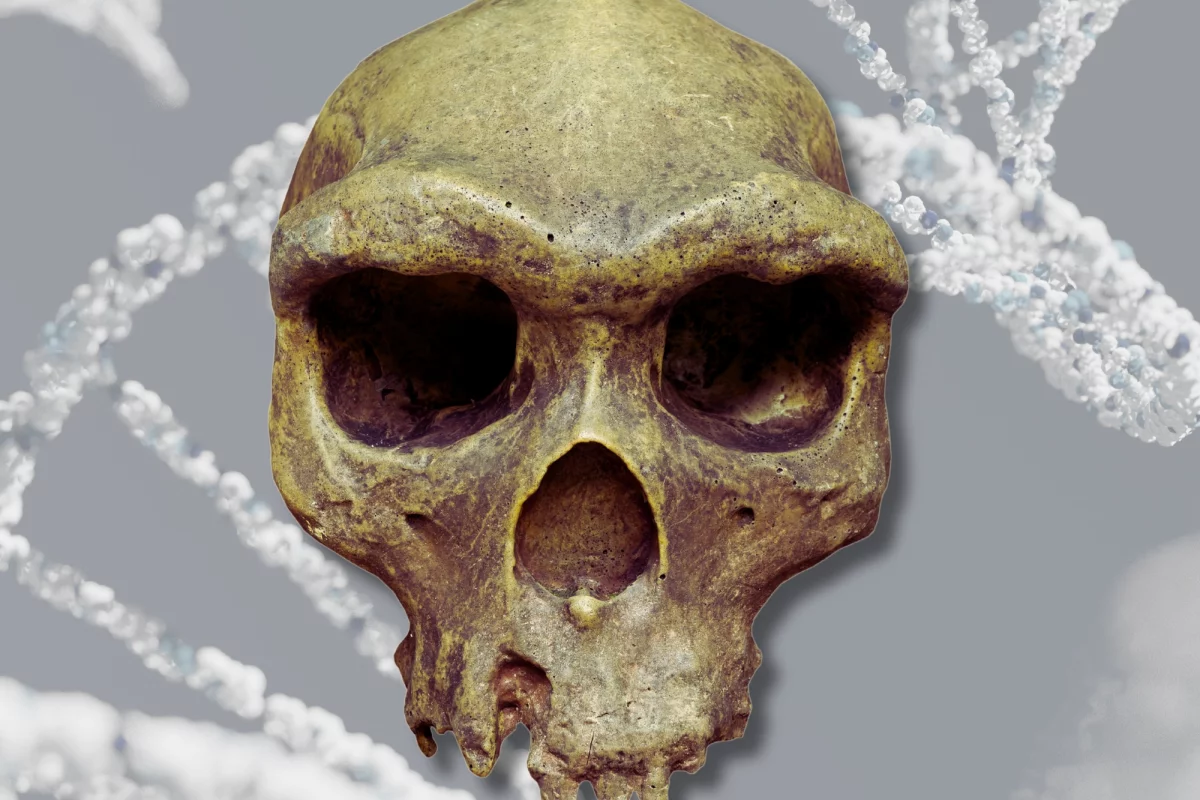
Why this is here: The study found a previously unknown amino acid variant in Homo erectus tooth enamel, present in about 21% of people in the Philippines today.
Qiaomei Fu from the Chinese Academy of Sciences and colleagues recovered ancient proteins from Homo erectus teeth in China. The team examined enamel from specimens found at Zhoukoudian, Hexian, and Sunjiadong—sites dating to roughly 400,000 years ago. They identified a unique amino acid variant shared by all six specimens, confirming their classification as H. erectus and resolving debate around the Hexian fossils.
This variant also appears in Denisovans, and at frequencies of about 21% in the Philippines and 1% in India. Researchers suggest H. erectus populations in East Asia interbred with Denisovans, passing this genetic material to modern humans in Southeast Asia and Oceania. This confirms that interbreeding between archaic human lineages was common, not isolated.
Recovering proteins allows study of fossils too old for DNA analysis, but the functional effects of the H. erectus-derived variant remain unknown. The team hopes to apply this method to other ancient hominin species—like Homo floresiensis and Homo luzonensis—to understand their genetic contributions.
Surfaced by the Discovery lens — one of the vital signs ovr.news reads.
How we evaluated this
AI summary
read the original for the full story — Read on refractor.io . How we work →