Dingo Burial Reveals Ancient Ritual
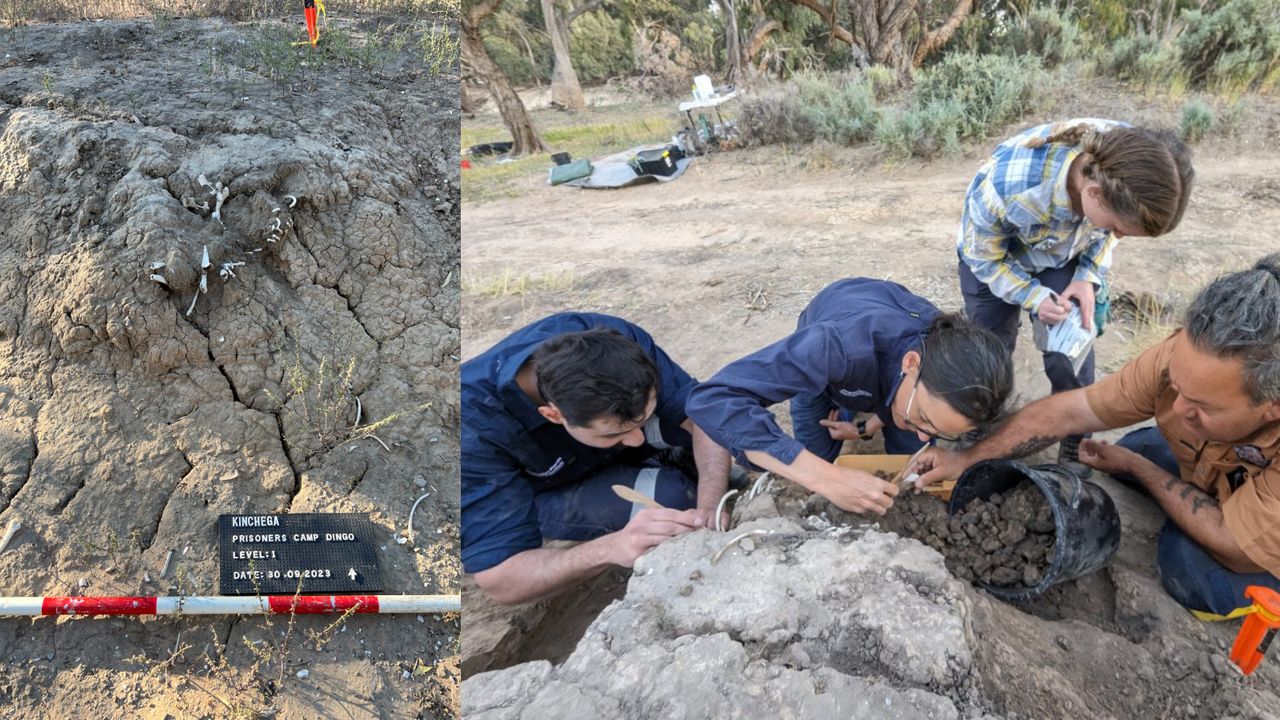
Why this is here: Mussel shells continued to be added to the dingo burial for roughly 500 years after the initial interment, demonstrating a long-term, multi-generational practice.
Archaeologists in western New South Wales, Australia, excavated a 950-year-old dingo burial and found evidence of ritualistic feeding. Researchers from the University of Sydney and the University of Western Australia worked with the Menindee Aboriginal Elders Council and Barkindji custodians to analyze the site. The dingo, a male between four and seven years old, was buried in a midden—a pile of discarded mussel shells—and subsequently “fed” with more shells for about 500 years.
Radiocarbon dating confirms the shells were added over generations. This practice suggests the Barkindji people deeply valued the dingo, referred to as “garli” in their language, and maintained a connection with it across time. The dingo showed signs of healed injuries, possibly from a kangaroo kick, hinting at care received during its life.
The team identified the burial 25 years ago with the help of Barkindji Elder Uncle Badger Bates. While dingos were known to be buried in the region, this is the first archaeological evidence of sustained, ritualistic offerings at a dingo grave.
Researchers acknowledge that the dingo skull has eroded since its initial discovery, motivating the current excavation and preservation efforts. The study continues to illuminate ancient connections between people and animals.
Surfaced by the Discovery lens — one of the vital signs ovr.news reads.
How we evaluated this
AI summary
read the original for the full story — Read on livescience.com . How we work →