Archaeologists find slave trade currency and elite shoe on 17th-century shipwreck
Headline and summary by local AI
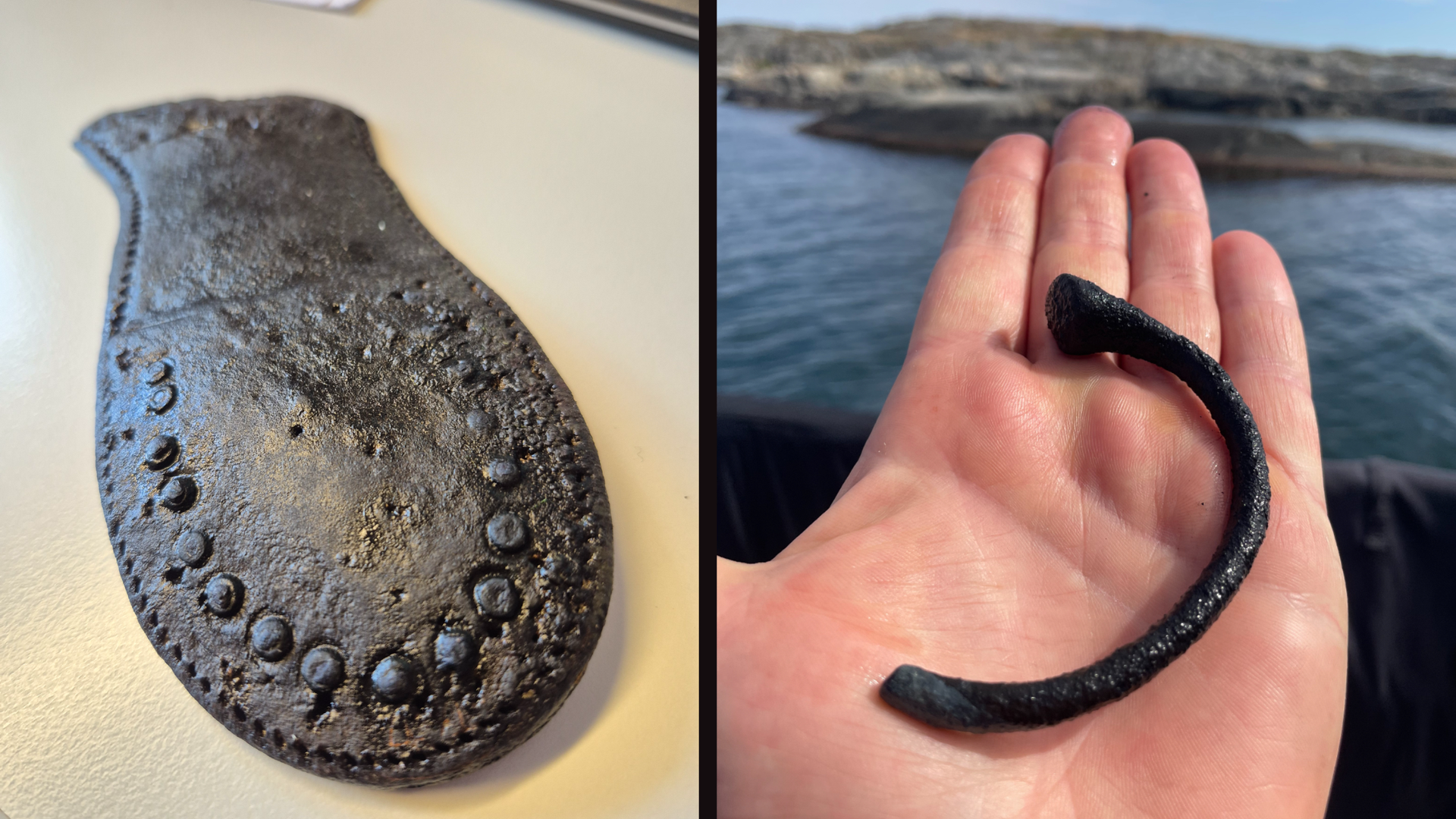
Maritime archaeologists discovered a high-quality shoe and two metal rings on a 17th-century shipwreck near Gothenburg, Sweden.
The wreckage belongs to the Danish frigate Havmanden, which sank in 1683 following a violent mutiny. The ship was transporting convicts and indentured servants to the Danish West Indies, a region that now includes the U.S. Virgin Islands. The mutiny occurred in the North Atlantic near the Azores because of a shortage of food and water.
Crewmembers and convicts seized the ship and headed toward Copenhagen, shooting the captain and throwing several officers overboard. Among those thrown into the sea was Jørgen Iversen Dyppel, the first governor of the Danish West Indies. The mutineers were eventually tried and sentenced to death after the ship ran aground. Experts from the National Museum of Denmark believe the shoe belonged to an upper-class individual, potentially Dyppel, due to its expert craftsmanship.
The archaeologists also found two manillas, which are ring-shaped metal pieces used as currency to purchase enslaved Africans in West Africa. These items provide physical evidence of Denmark's involvement in the transatlantic slave trade. While the Danish monarchy banned the slave trade in 1792, slavery continued in the Danish West Indies until 1848.
Selected and summarized by local AI How we work