Archaeologists discover fifth century Germanic chieftain burials in France
Headline and summary by local AI
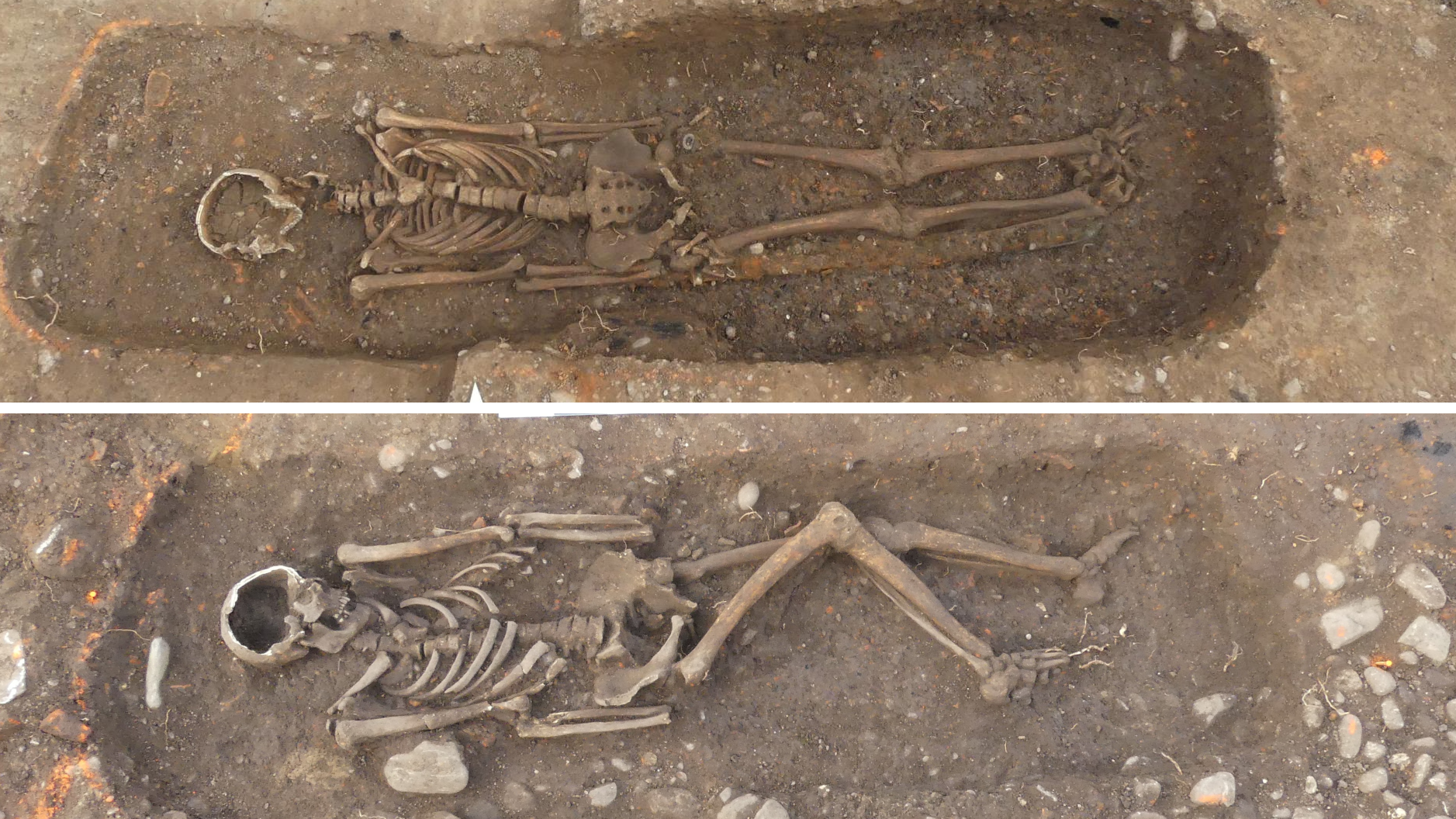
Archaeologists in northeastern France unearthed a small fifth-century cemetery containing the graves of two Germanic chieftains and two warhorses.
The site was located near the city of Colmar, a few miles from the Rhine River which serves as the border between France and Germany. The discovery provides new details about the transitional period following the collapse of the Roman Empire. The cemetery was used between A.D. 450 and 500.
This era was marked by the repeated occupation of Rome by Germanic tribes, including the Goths and the Vandals. Researchers found 11 adult graves, three children's graves, and two horse burials at the site. Among the finds were gold-and-garnet accessories on weapons and clothing, as well as silver bird-shaped brooches and glass bead necklaces in female graves.
Two male burials contained high-quality grave goods, including a sword with a partially preserved wooden scabbard, a shield, a javelin, and a scramasax, which is a type of Germanic short sword. The presence of these weapons and the nearby horses suggests the men were chieftains or mercenaries. Analysis of the skeletons showed that two individuals suffered stab wounds with no signs of healing, while another man had a fused right knee bone.
The French National Institute for Preventive Archaeological Research says the site offers a rare look at the upheavals of the Western Roman Empire's collapse. Because few Germanic cemeteries from this period have been found, the site helps researchers understand how the political fall of the empire affected communities on its edges. Scientists plan to study the skeletons further to confirm if the visible injuries occurred during combat.
Selected and summarized by local AI How we work