Five-hundred-year-old bust reveals Benin kingdom’s royal history
Summary and headline written by AI from the source article. How we work
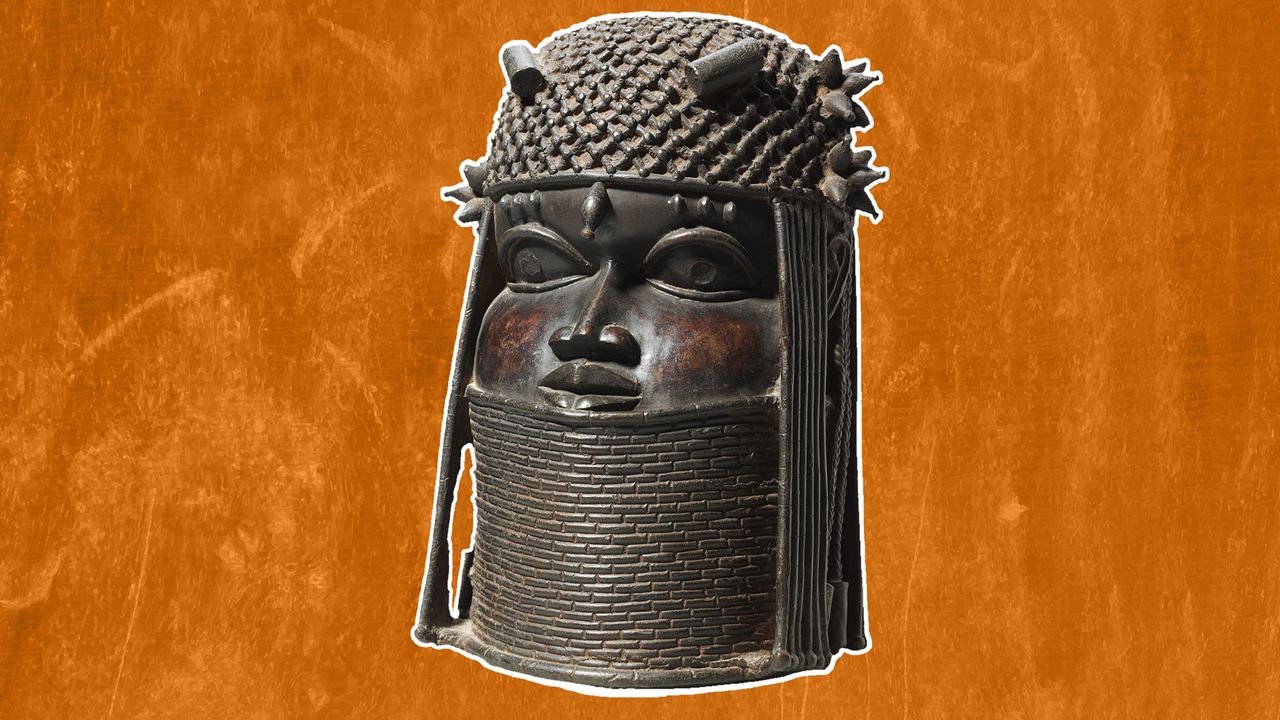
Artisans in the Kingdom of Benin, in present-day Nigeria, created a brass bust around the mid-1500s to honour a past king.
Rulers, known as obas, commissioned these busts, called “uhunmwun-elao” in the Edo language, to place on ancestral altars in the palace. The roughly one-foot-tall sculpture depicts an oba wearing coral necklaces and braids, symbols of their authority. The Igun Eronmwon, a guild of brass and bronze workers, crafted the bust using a lost-wax casting process, creating a unique piece.
Benin royalty valued brass for its resistance to corrosion, importing the metal from as far away as Germany. The bust would have originally supported an elephant tusk carved with the oba’s achievements. In 1897, British forces invaded Benin and looted thousands of artworks, including this bust, which ended up in the Cleveland Museum of Art.
Nigeria has formally requested the return of these “Benin Bronzes”, though many are actually brass, and several institutions, including museums in Germany, the Smithsonian, and the Netherlands, have begun repatriating them. However, the British Museum has not yet returned any of its collection, despite a formal request in 2021.