Sahara Graves Predate Ancient Egypt
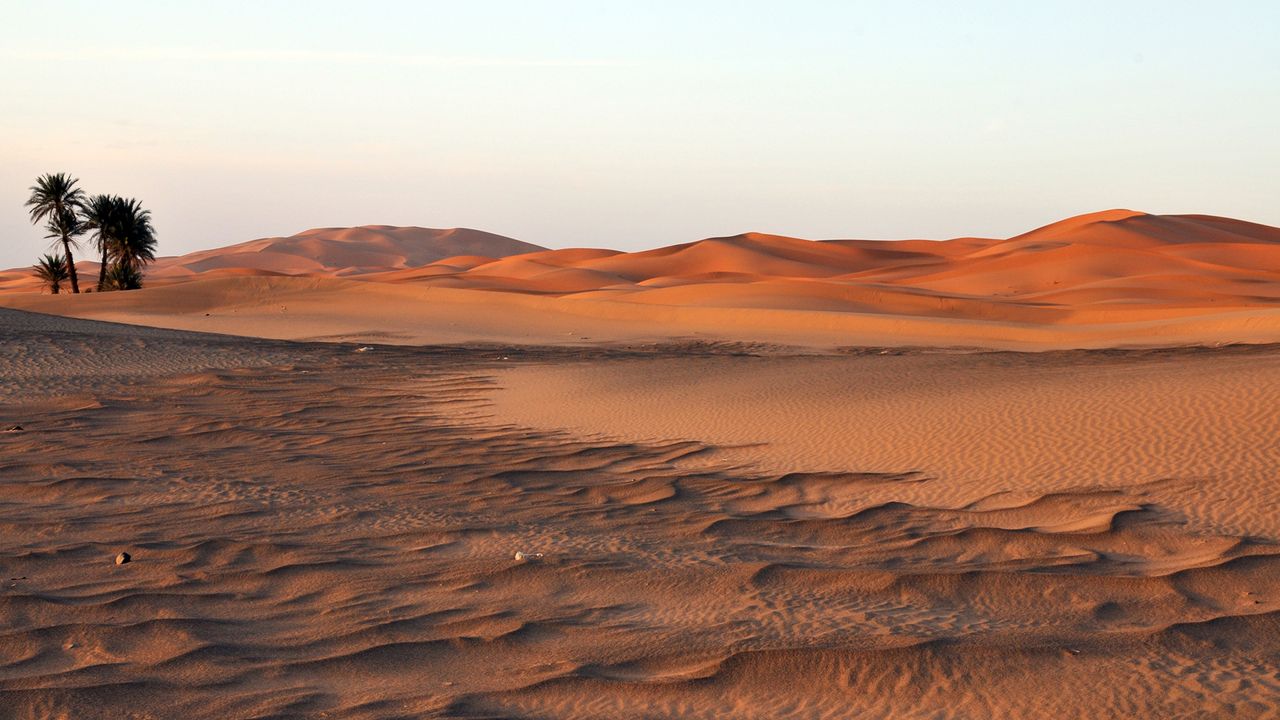
Why this is here: Researchers identified 260 previously unknown enclosure burials, revealing a pattern of circular monuments stretching across almost 1,000 kilometers of the Sudanese desert.
Archaeologists working in eastern Sudan discovered 260 circular enclosure burials dating to roughly 4000–3000 BCE. An international team from Macquarie University, France’s HiSoMA, and the Polish Academy of Sciences used satellite imagery to locate the monuments across nearly 1,000 kilometers of the Atbai Desert. These large enclosures, some up to 80 meters in diameter, contain the remains of both humans and livestock—cattle, sheep, and goats—often arranged around a central burial.
The burials suggest a nomadic culture existed in the Sahara before the rise of Pharaonic Egypt, and indicate the emergence of social hierarchies within these communities. Cattle appear to have held significant cultural value, with animals frequently buried alongside their owners. Later nomadic groups even reused these ancient enclosures for their own burials, spanning millennia.
However, satellite imagery alone offers an incomplete picture of these people. The research notes the monuments are located near former watering spots, suggesting the region was already arid when they were built. The team continues to investigate what ultimately led these Saharan nomads to abandon these sites, and faces the immediate threat of unregulated mining damaging the monuments.
Surfaced by the Discovery lens — one of the vital signs ovr.news reads.
How we evaluated this
AI summary
read the original for the full story — Read on livescience.com . How we work →