Scientists Recreate Ancient RNA to Study Life’s Origins
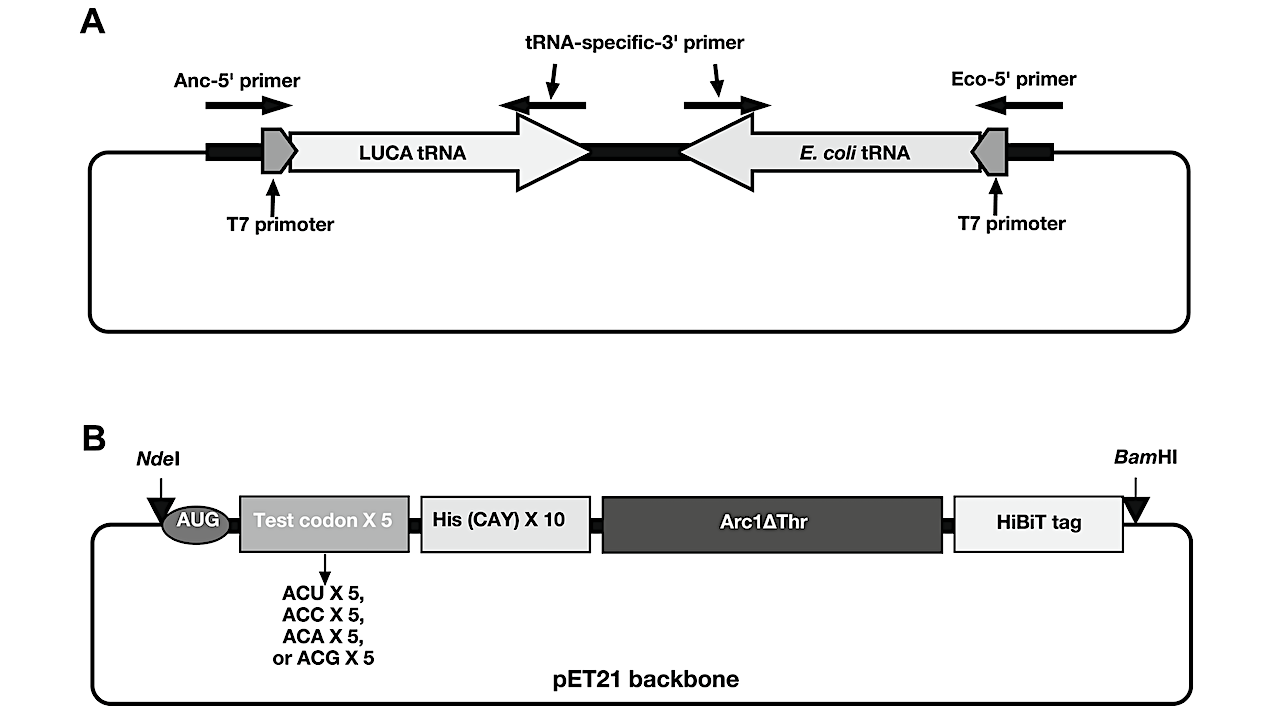
Researchers reconstructed transfer RNA molecules from the Last Universal Common Ancestor, the shared ancestor of all life, to investigate the evolution of translation systems. The team used ancestral sequence reconstruction to infer tRNA sequences from the Last Archaeal Common Ancestor, the Last Bacterial Common Ancestor, and LUCA, calling their work “Commonote.” Analysis of these reconstructed tRNAs revealed a phylogenetic tree differing from those based on aminoacyl-tRNA synthetase, suggesting separate evolutionary pressures acted on these molecules.
The scientists identified conserved elements within the ancient tRNAs, indicating these features are likely original to early life. They then tested the functionality of LUCA tRNA variants in a modern E. coli system, finding that the reconstructed tRNAs successfully decoded codons.
Decoding patterns observed challenged existing rules governing codon-anticodon interactions. This work provides a new understanding of the translation system’s early evolution and demonstrates the potential for ancient RNAs to function in contemporary biological systems.
Surfaced by the Discovery lens — one of the vital signs ovr.news reads.
How we evaluated this
AI summary
read the original for the full story — Read on astrobiology.com . How we work →