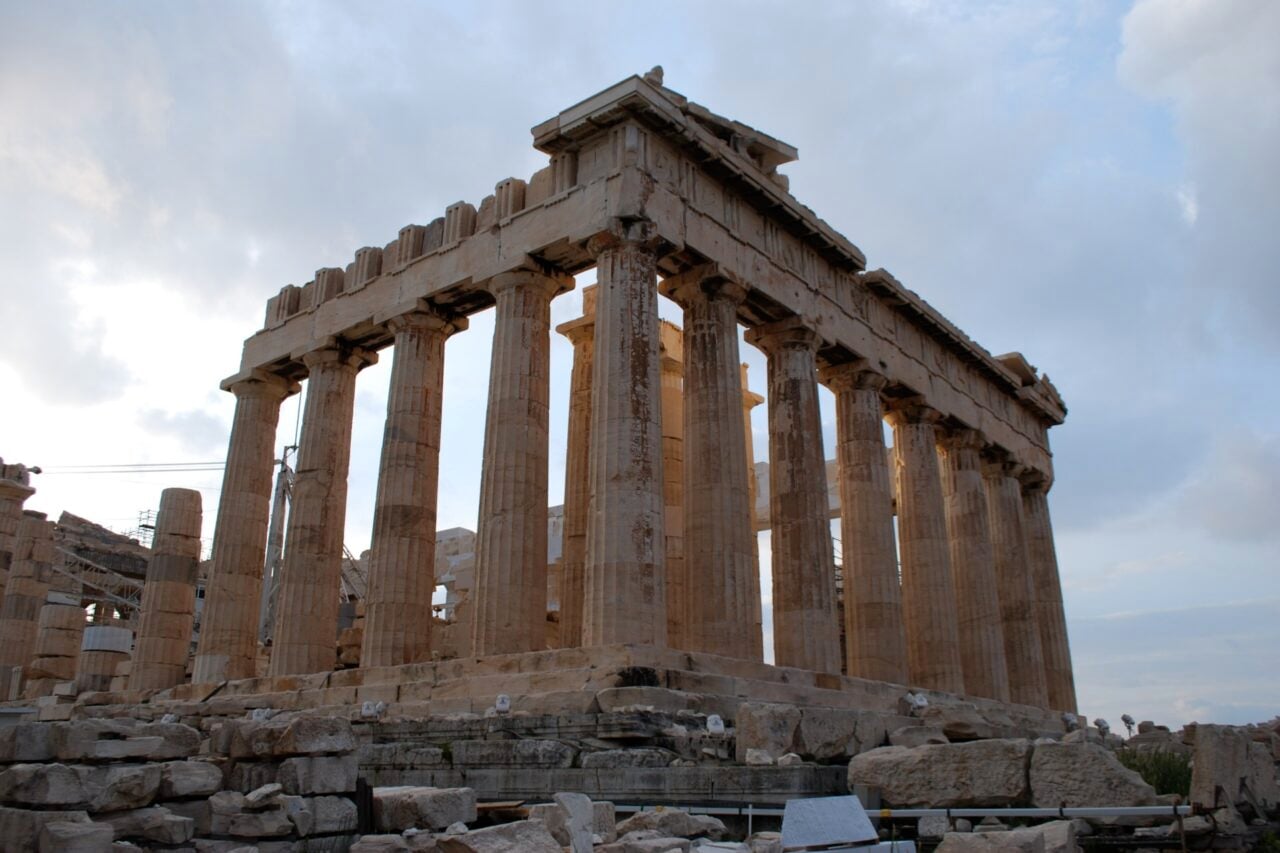
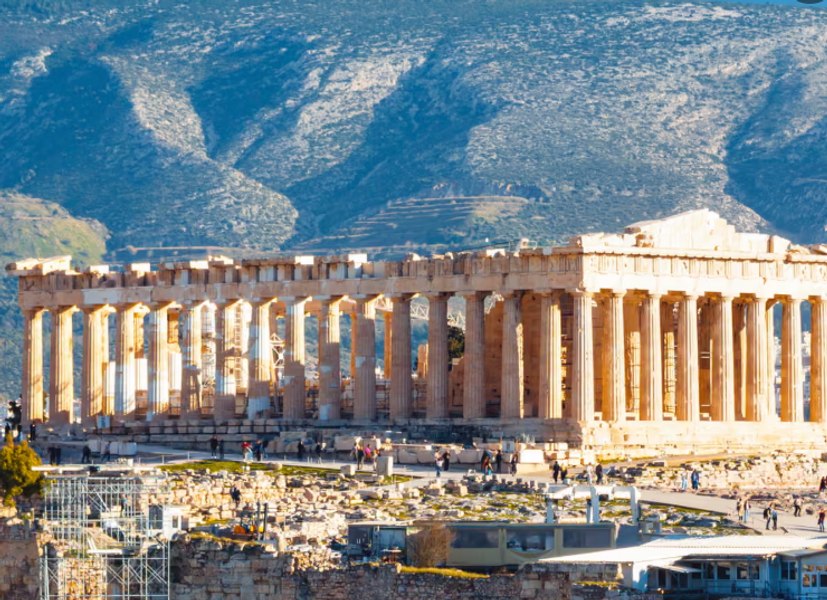
Oxford mathematician challenges long-held beliefs about the Parthenon
Summary and headline written by AI from the source article. How we work
Alain Goriely, a mathematician at the University of Oxford, is questioning established explanations for the design of the Parthenon in Athens, Greece.
Goriely analyzed theories suggesting ancient Greek architects built subtle curves into the temple to counteract optical illusions. He found that these supposed illusions either do not exist or are too slight to be noticed from typical viewing distances. Goriely examined the temple’s base, known as the stylobate, which rises slightly towards the center.
Traditional explanations claim this curve prevents the base from appearing to sag. However, Goriely’s research indicates there’s no proof this effect naturally occurs, and a related illusion, the Hering illusion, doesn’t strongly affect structures like the Parthenon because its columns are mostly vertical. He also investigated the slight outward bulge of the Parthenon’s columns, called entasis, previously thought to counter an illusion making the columns seem narrower at the center.
Goriely discovered no evidence supporting this illusion, noting the bulge is only about 18 millimeters, making it difficult to perceive from a distance. He traced the origin of these theories back to Vitruvius, a Roman architect who wrote about Greek architecture around 400 years after the Parthenon was built. Goriely suggests the curves may have served practical purposes, such as preventing water from pooling, or simply been aesthetic choices. His study appeared in Royal Society Open Science.