Carnegie Libraries Still Serve Communities
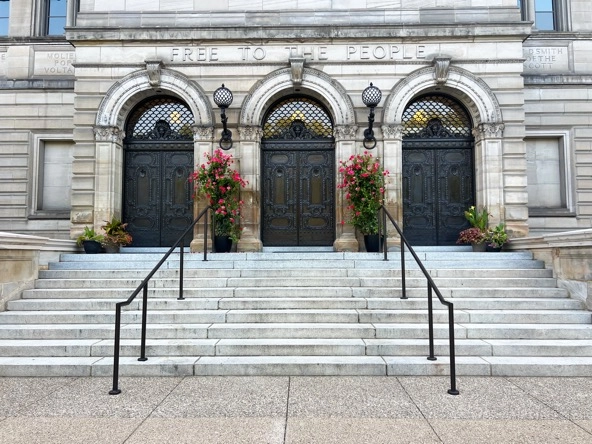
Why this is here: The more than 2,500 libraries funded by Andrew Carnegie continue to benefit communities, even though their impact wouldn’t meet the quantitative standards of many modern grantmakers.
In the United States, a former Carnegie library in one town continues to function as an event space over a century after its construction. Built in 1904 with a $27,000 grant from Andrew Carnegie, the building initially served as a public library for seventy years. It later became a public arts center and now hosts community events, including a high school reunion.
Sarah Cone argues that philanthropists today rarely match the ambition of figures like Carnegie and John D. Rockefeller, who built lasting civic institutions.
Contemporary grantmakers often prioritize quantifiable results, which may not have captured the long-term benefits of the over 2,500 Carnegie libraries. Patrick Awuah of Ghana’s Ashesi University offers a modern example, founding a university to cultivate ethical leaders.
John Kluge Jr. and Christine Mahoney highlight efforts to support refugees, noting the need for institutions that empower displaced people. The Stanford Social Innovation Review intends to detail solutions and question power dynamics, hoping its work will influence positive change.
Surfaced by the Discovery lens — one of the vital signs ovr.news reads.
How we evaluated this
AI summary
read the original for the full story — Read on ssir.org . How we work →