XPeng Starts Mass Production of Robotaxi
Why this is here: XPeng’s robotaxi system aims for a response latency of less than 80 milliseconds, eliminating a translation step common in traditional vision-language-action architectures.
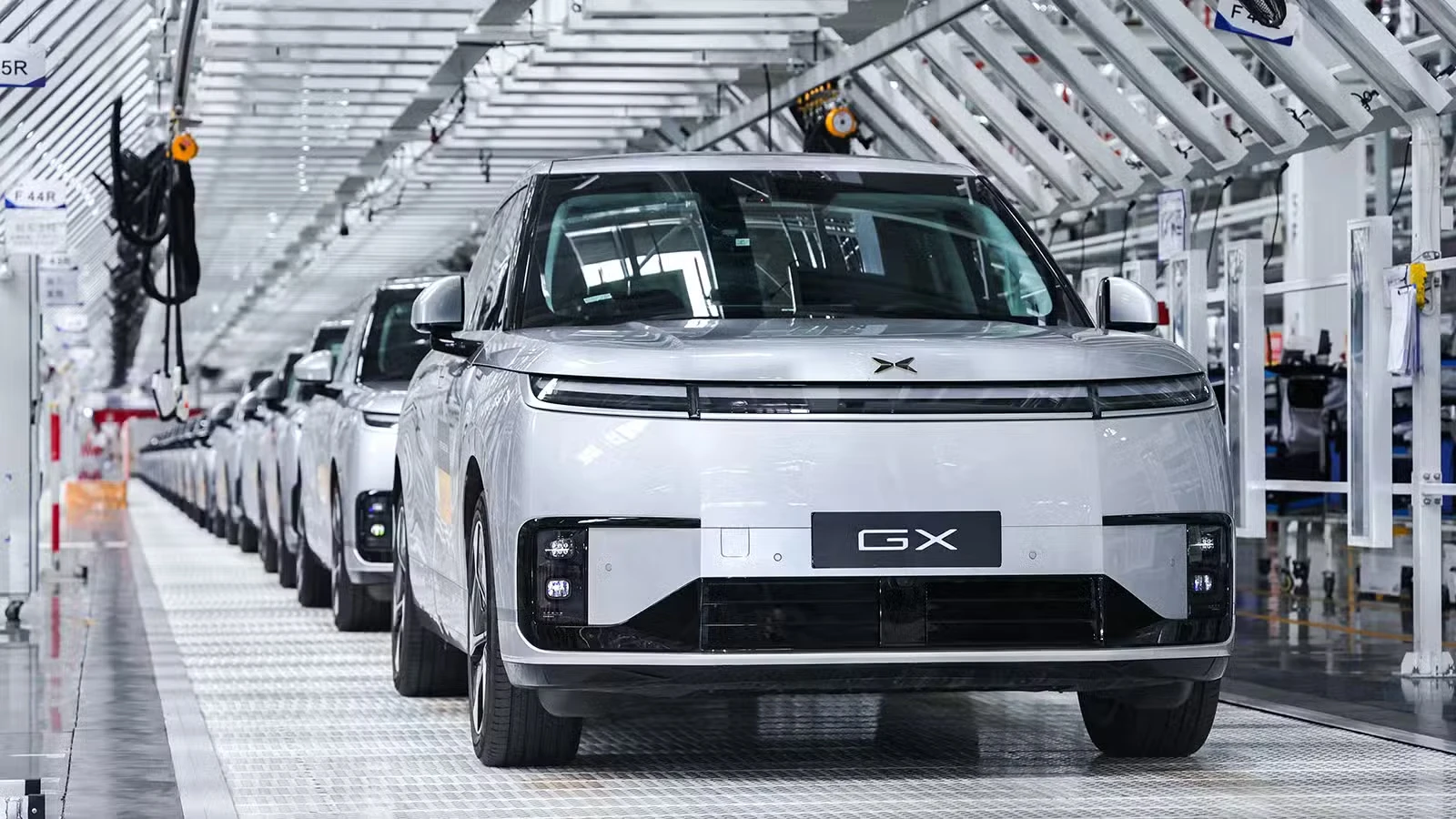
Chinese automaker XPeng began mass production of its Level 4 autonomous vehicle in Guangzhou. The company became the first Chinese carmaker to fully develop a robotaxi in-house—from the electronic chip to the software—and share a platform with its consumer SUV.
The robotaxi operates using Level 4 autonomy, navigating within a defined area without human intervention. It integrates four Turing chips, providing a total processing capacity of 3,000 TOPS.
Notably, the system relies on a “pure vision” approach, forgoing LiDAR sensors and high-definition mapping. XPeng’s VLA 2.0 AI model aims to reduce system response latency to under 80 milliseconds.
XPeng shares key components—Turing chips, the VLA 2.0 autonomous driving system, and Bosch steer-by-wire technology—between the robotaxi and its GX SUV. The robotaxi will offer configurations for five, six, or seven passengers.
While XPeng received road test authorization in January 2026 and created a dedicated robotaxi division in March, pilot operations are planned for the latter half of 2026, requiring a safety operator onboard. Full, unsupervised operation is targeted for early 2027.
Surfaced by the Solutions lens — one of the vital signs ovr.news reads.
How we evaluated this
AI summary
read the original for the full story — Read on pplware.sapo.pt . How we work →