Brazilian dinosaur fossil may contain evidence of ancient blood cells
Headline and summary by local AI
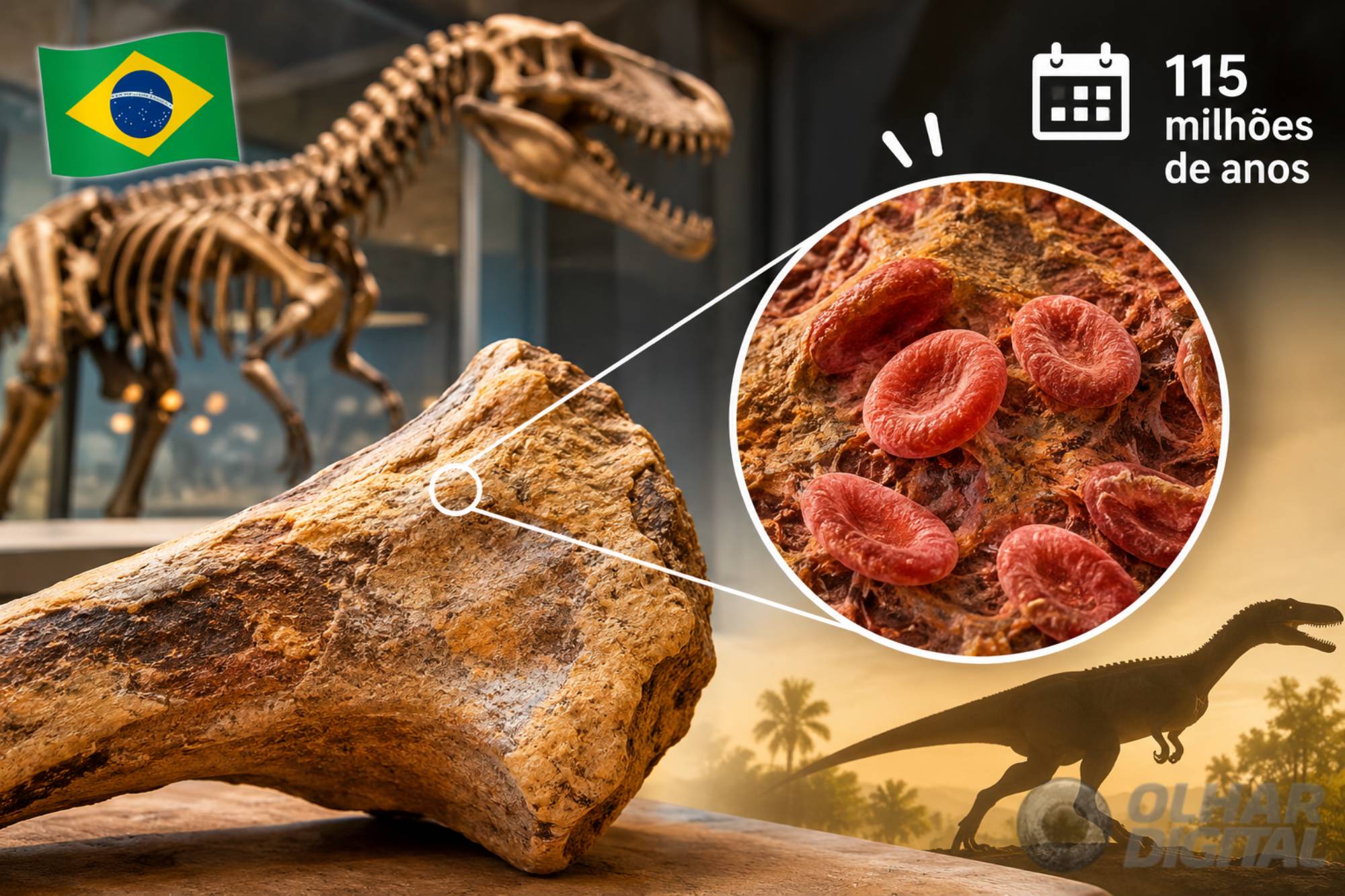
Scientists from Curtin University in Australia identified microscopic structures resembling red blood cells in a 115 million year old dinosaur fossil found in Brazil.
The researchers analyzed bone fragments from the leg of an Aratasaurus museunacionali, a theropod dinosaur that lived in the Brazilian Northeast during the Cretaceous period. The specimen was originally discovered in a Brazilian mine in 2008 and is currently housed at the Museu Nacional.
The team used electron microscopy to find rounded structures within tiny channels where blood vessels once ran. They also conducted chemical tests that detected heme, an organic compound associated with hemoglobin, and components linked to collagen. This combination of visual and chemical evidence marks the first time researchers have found such structures accompanied by heme-related traces in a fossil. The scientists believe a mineral called hausmannite may have helped stabilize or replicate these cellular structures during the fossilization process.
While the discovery could help researchers study prehistoric metabolism and activity levels, some experts remain cautious. Mary Schweitzer, a paleontologist at North Carolina State University in the United States, noted that the identified structures are concave, whereas dinosaur red blood cells should appear convex. Kliti Grice, the study leader, clarified that the findings do not mean complex molecules like DNA survived for millions of years, but rather that original biological information left a mineralized record.
Selected and summarized by local AI How we work